
The global startup landscape is entering a brand new generation defined by synthetic intelligence, automation, advanced computing, cybersecurity, fintech, robotics, and other rising technologies. High-tech companies and startups are now not competing simply on progressive ideas; they may be competing on how quickly they are able to remodel those ideas into scalable products and sustainable businesses.
From AI-powered software businesses to robotics corporations and climate-tech ventures, technology is converting how startups are founded, funded, operated, and scaled. At the same time, investors and clients are getting extra selective, making enterprise basics simply as important as technological innovation.
What Is a High-Tech Startup?
A high-tech startup is a young business enterprise that relies closely on superior technology to expand a product, service, or commercial enterprise version. Unlike conventional startups, high-tech corporations regularly build their competitive advantage around proprietary software, artificial intelligence, data, hardware, biotechnology, cloud infrastructure, or other superior technology.
Examples can include:
- Artificial intelligence startups
- Cybersecurity organizations
- Robotics startups
- Fintech applications
- Semiconductor agencies
- Cloud computing platforms
- Health-tech groups
- Climate-tech answers
- Quantum computing ventures
- Advanced manufacturing groups
The defining characteristic isn’t, without a doubt,t using generation. A high-tech startup generally uses AI as a central part of its product and approach.
Artificial Intelligence Is Reshaping the Startup Landscape

Artificial intelligence has become one of the most crucial technologies for current startups. Generative AI, system studying, computer vision, natural-language processing, and AI services are growing possibilities across industries.
Startups are using AI to automate customer service, examine huge datasets, generate content, detect fraud, optimize supply chains, develop software, and personalize digital reports.
The strongest possibility won’t continually be building another popular-cause AI model. Instead, startups can create specialized packages that clear up unique problems for businesses and consumers.
For example, an AI startup serving healthcare carriers should focus on administrative automation, whilst any other organization could use device monitoring to help manufacturers predict gadget screw-ups.
The Rise of Automation
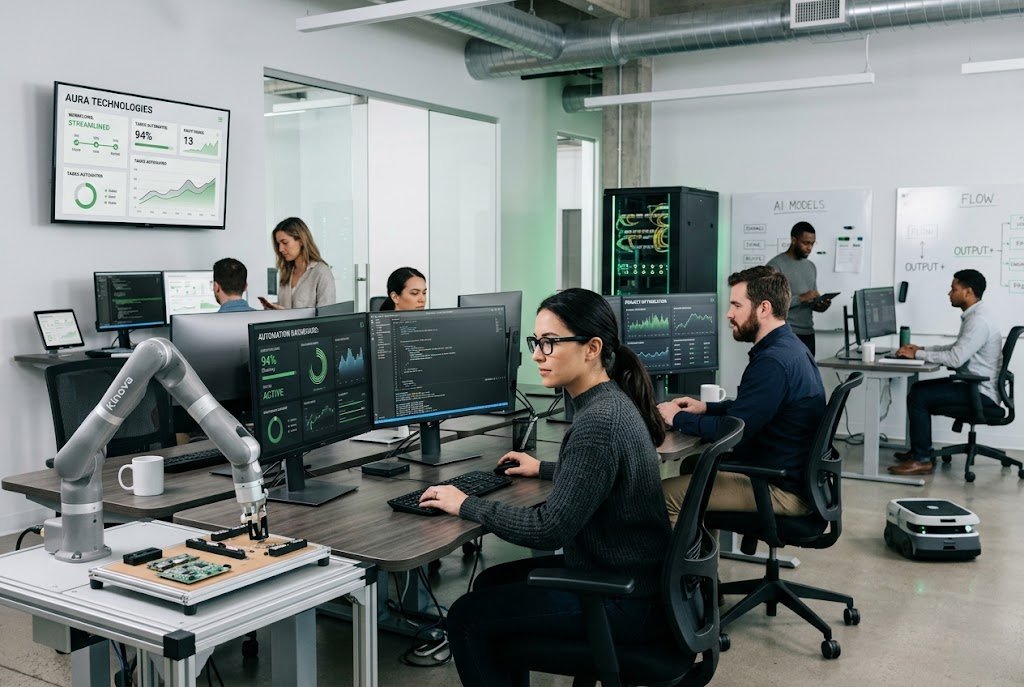
Automation is another fundamental driving force behind the growth of tech startups.
Businesses are increasingly seeking out ways to reduce repetitive work and improve operational performance. Cloud systems, AI tools, robotic process automation, and smart software systems allow businesses to automate tasks that previously required significant human effort.
For startups, automation can also enhance internal operations. A small group can use modern software tools for accounting, marketing, customer support, software improvement, analytics, and income.
This approach to technology isn’t always best for growing new startups; it is changing how startups themselves are built.
Fintech Continues to Create Opportunities. The financial sector remains one of the most active regions of startup innovation.
Digital payments, online banking, embedded finance, fraud detection, economic automation, and blockchain-based infrastructure have modified how consumers and agencies interact with monetary offerings.
Emerging markets can be particularly appealing because large populations may still have limited access to standard financial products. Startups that provide low-priced virtual monetary offerings can undoubtedly attract customers who have been previously underserved.
However, fintech organizations additionally face tremendous regulatory, security, and compliance challenges. Successful founders have to therefore recognize each technology and financial regulation. Cybersecurity Is Becoming a Strategic Priority
As more businesses move their operations online, cybersecurity has become an essential component of the digital economy.
Companies are storing more information in cloud environments and relying on connected devices, APIs, remote work systems, and digital platforms. These developments create new opportunities for cybercriminals while increasing demand for security solutions.
High-tech startups are developing products for identity management, threat detection, data protection, cloud security, endpoint protection, and automated security monitoring.
For entrepreneurs, cybersecurity offers a large market, but customers often demand a high level of trust and technical expertise before adopting new solutions.
Robotics and Advanced Hardware
While software startups can frequently launch with noticeably low initial expenses, robotics and hardware corporations face especially demanding situations.
Robotics startups might also require considerable investment in research, engineering, manufacturing, testing, and supply chains. However, advances in AI, sensors, laptops, and lower-power computing are making sophisticated robot systems increasingly realistic.
Potential applications encompass:
• Warehouse automation
• Agricultural robotics
• Industrial inspection
• Healthcare robotics
• Autonomous structures
• Delivery era
• Manufacturing automation
The combination of AI and robotics should become especially crucial as companies search for approaches to improve productivity and cope with workforce shortages.
Climate Tech and Sustainable Innovation

Climate generation is becoming an increasingly crucial part of the startup environment.
Entrepreneurs are developing technology for renewable power, energy storage, electric-powered transportation, carbon management, sustainable agriculture, water management, and energy efficiency.
Unlike a few patron software organizations, climate-tech startups regularly require vast capital and longer improvement timelines. Nevertheless, the capital market is growing due to the fact that governments and businesses are increasingly making investments in technology that may improve aid performance and decrease environmental impact.
Why Startup Funding Is Changing
The startup funding landscape has become more focused on sustainable growth and measurable business performance.
Investors increasingly want to understand:
• How large is the target market?
• Does the organization have a defensible edge?
• Who are its clients?
• How fast is revenue growing?
• What is the customer acquisition cost?
• How sturdy is purchaser retention?
• Can the enterprise attain profitability?
• Does the business have a sustainable competitive advantage?
Technology by itself is not sufficient.
A startup may additionally have an outstanding product; however, it can still fail if it can not find clients, control prices, or build a scalable business model.
The Importance of Product-Market Fit
One of the most essential standards for a startup is product-market fit.
Product-market fit happens when a product successfully solves a meaningful customer hassle, and there is enough demand for it.
High-tech founders every so often make the mistake of building a product first and searching for a market afterward. A more potent approach is to discover a tremendous problem, validate the call for it, and then increase the era that solves it correctly.
This is particularly vital in aggressive markets wherein clients have many alternatives.
Global Competition Is Increasing
Technology has made competition increasingly global.
An agency founded in one. S . A . can promote software programs to customers around the world. Developers can collaborate remotely, cloud infrastructure can assist international operations, and digital marketing can attain global audiences.
This creates opportunities for entrepreneurs in emerging technology hubs.
Countries that include Pakistan, India, the United Arab Emirates, Singapore, and numerous African markets have developing-era ecosystems and increasingly connected entrepreneurial groups.
For startups in those markets, getting the right entry to worldwide customers may be as important as getting the right entry to the local market.
Challenges Facing High-Tech Startups
Despite the opportunities, building a high-tech startup remains difficult.
High Development Costs
The advanced era regularly calls for experienced engineers, researchers, infrastructure, and specialized gadgets.
Talent Competition Talent in AI, software, cybersecurity, and engineering is incredibly competitive.
Regulatory Uncertainty
AI, fintech, healthcare generation, biotechnology, and other sectors can face complicated regulatory requirements.
Cybersecurity Risks
Startups handling customer data need to defend their systems from attacks and data breaches.
Market Competition
Successful categories can quickly become crowded as competition enters the marketplace.
Scaling Problems
A product that works for a few hundred customers may require extensive modifications before it is able to serve hundreds of thousands.
What Makes a High-Tech Startup Successful?
Technology is essential; however, a hit startups generally combine several factors.Serious trouble: The enterprise solves a proper and precious hassle.
Excellent product: The product offers a meaningful benefit.
Strong team: Founders and personnel have the technical and business abilities needed to execute.
Clear business model: The organization is aware of how it’s going to generate sustainable revenue.
Customer recognition: Product improvement is driven by real customer needs.
Adaptability: The organization can respond to technological and marketplace changes.
Efficient execution: The group can move quickly without sacrificing reliability orqualitye.
The Future of High-Tech and Startups
The next generation of startups will likely emerge at the intersection of multiple technologies rather than from a single technological class.
Artificial intelligence could combine with robotics. AI could transform healthcare. Blockchain infrastructure could combine with monetary offerings. Advanced sensors should join physical merchandise to cloud systems. Automation may want to reshape production and logistics.
The most exciting opportunities may also come from combining technologies to resolve issues that were formerly difficult or not possible to address.
For marketers, this creates an effective opportunity—but additionally raises the bar. Having access to superiortechnologya is becoming simpler, at the same time as constructing a long-lasting organization remains tough.
The Competitive Edge of High-Tech Startups
High-tech startups are increasingly competing via proprietary technology, specialized facts, high-value property, and highly skilled teams. Companies that can flip emerging technology into realistic solutions might also gain aanextensive competitive advantage. However, rapid innovation additionally creates risks, consisting of high research costs, regulatory uncertainty, cybersecurity threats, and cshiftingclient expectations. For traders and founders, the strongest possibilities are probably to emerge where superior technology intersects with huge markets, clear customer demand, and scalable business models.
Conclusion
High-tech startups are playing an increasingly crucial role in the worldwide financial system. Artificial intelligence, automation, cybersecurity, fintech, robotics, climate technology, and superior computing are opening new markets at the same time as remodeling sestablishedindustries.
However, technological innovation by itself does not now guarantee startup success. Companies want sturdy products, actual customer demand, successful teams, sustainable economics, and the potential to adapt.