
Introduction
Smart glasses are becoming more than stylish accessories. They can capture images, solve questions, translate conversations, and connect users with artificial intelligence without requiring them to pull out a telephone. Alibaba is now stepping into this developing market with its new Qwen Glasses N1 series.
Unveiled in Hangzhou on October 13, 2026, the Alibaba AI glasses start at 3,799 yuan, approximately 537 USD, earlier than discounts, in line with Bloomberg’s report. The new lineup combines cameras, voice-based AI help, and connected offerings in an ordinary wearable tool.
The launch also places Alibaba in extra direct competition with Meta, whose Ray-Ban smart glasses have helped introduce AI-powered eyewear to mainstream clients. Alibaba’s method brings its own advantage: long-standing ecosystems of artificial intelligence, shopping, and payment offerings.
But can these glasses provide enough sensible value to justify their charge? Let’s examine their functions, pricing, capacity benefits, and the challenges Alibaba must overcome.
What Are Alibaba’s Qwen AI Glasses S1?
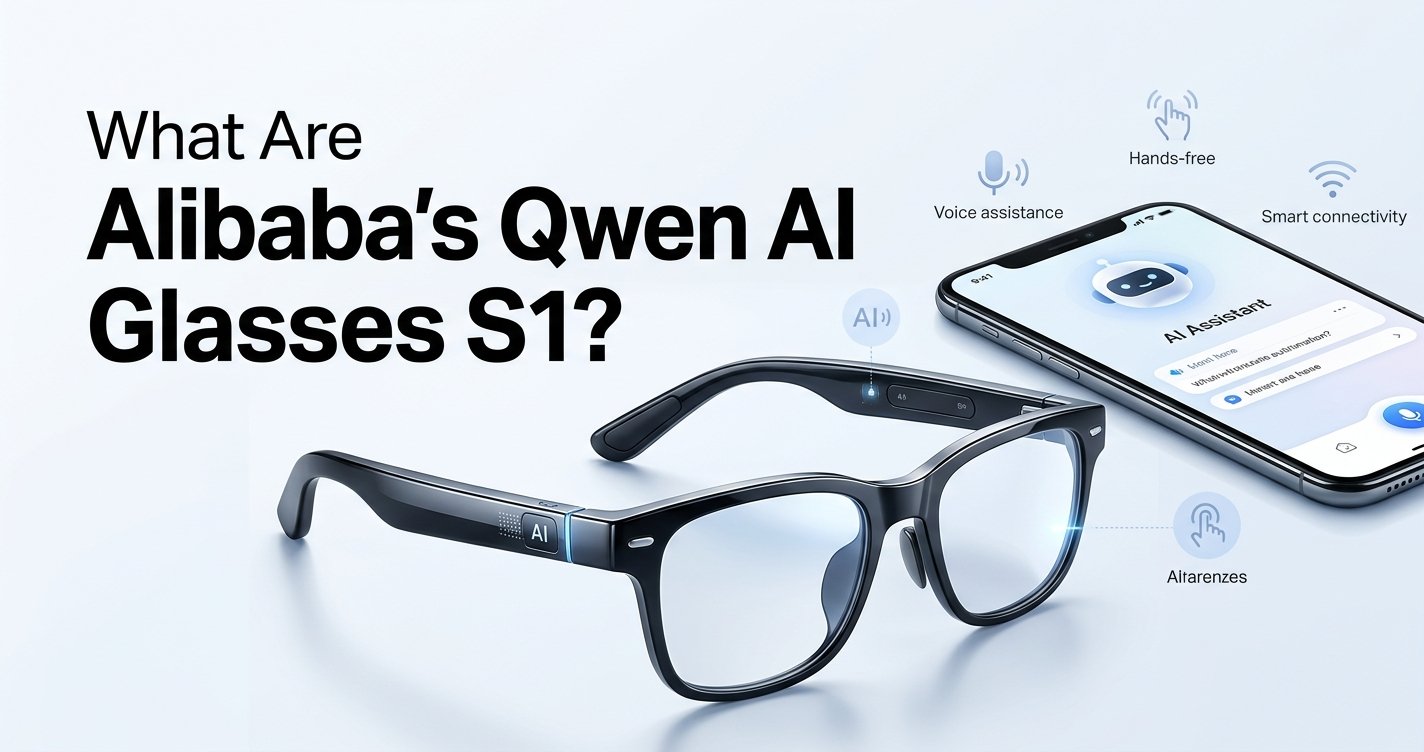
The Qwen Glasses S1 are AI-powered smart glasses developed by Alibaba to bring its Qwen AI assistant into everyday use. Instead of relying entirely on a phone display, customers can engage with supported AI features through the glasses.
The new series includes two models: the usual S1 and the more advanced S1 Pro. Both offer recognition for arms-free interaction and first-person picture and video capture, even as the Pro version provides capabilities such as eye tracking and additional biometric features.
This technique reflects a broader shift in customer generation. Companies are exploring methods to make AI available through devices human beings can wear in the course of the day, as opposed to limiting it to websites, apps, and chatbots.
Imagine asking an assistant to translate a communication or capture a second even as retaining your arms free. That is the type of convenience smart glasses aim to provide. Whether they work easily in normal life, however, relies upon software performance, connectivity, comfort, and overall battery performance.
How Much Do Alibaba AI Glasses Cost?
The reported starting price for Alibaba’s Qwen Glasses S1 series is ¥ 3,799, or about $537 USD, before discounts, in line with Bloomberg.
Other reviews have noted decreased costs for certain configurations after subsidies and promotional offers. These figures should not be treated as identical retail costs because discounts, version specs, and purchasing situations can vary.
The key pricing details are: Qwen AI Glasses S1
- Standard S1: The entry-level version, designed around mid-level AI help and digicam functions.
- S1 Pro: The higher-end choice, with extra abilities together with eye tracking and biometric capabilities.
- Discounted pricing: Eligible customers in China may see lower charges through subsidies or retailer promotions.
For international buyers, the final fee remains an essential question. Local availability, import duties, warranty coverage, and software program help can all affect the real price. Buyers must confirm current fees through reputable or authorized dealers before purchasing.
At around $ 45 more than discounted prices, the glasses are not truly a cheaper option. Consumers will expect dependable performance and useful features that justify paying a top rate for wearable AI.
What Features Do Alibaba AI Glasses Offer?
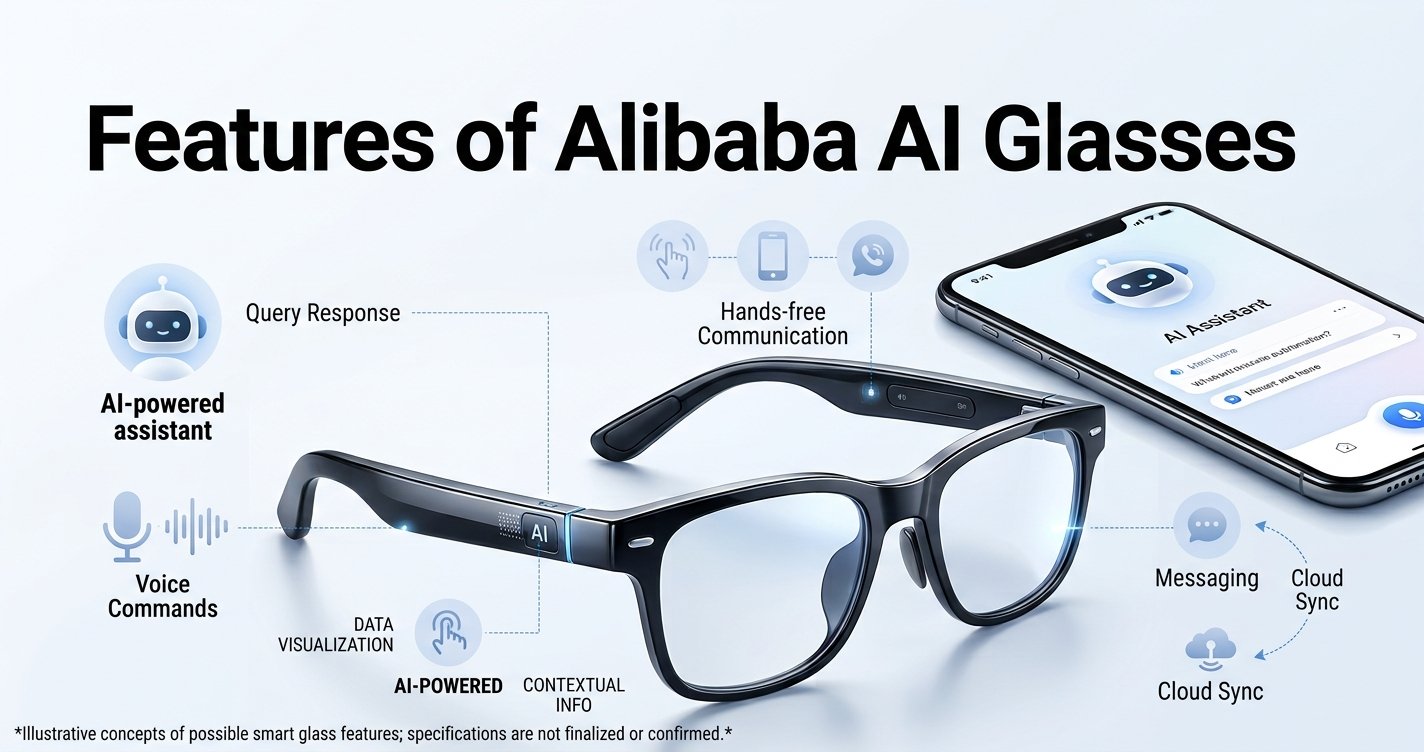
The Qwen AI Glasses S1 series combines numerous technologies in a package designed for everyday use.
1. A 50MP Camera for Photos and Videos
Both stated models feature a 50-megapixel digital camera, with support for 4K video recording, Live Photos, and photo stabilization.
The camera gives users a way to capture first-person footage without carrying a cellphone. This might be beneficial for travel, outdoor sports, short recordings, and conditions in which maintaining each hand is difficult.
However, an excessive megapixel count on its own does not guarantee a top-notch image. Sensor overall performance, lighting, stabilization, and picture processing all have an impact on the final result. Independent testing can be important to determine how well the digicam performs in real-world situations.
Privacy additionally deserves attention. Recording with glasses may be less apparent than filming with a cellphone, so users must respect other people’s privacy and comply with local recording legal guidelines.
2. Qwen AI Assistance
Alibaba is integrating its Qwen AI Glasses S1 era into the glasses to provide voice-based total help and different supported features.
Rather than opening an app and typing a question, customers can interact with the assistant through voice commands. Reported capabilities include AI-powered assistance, translation, and note-taking functions.
For example, a person attending an assembly should benefit from transcription tools, even as a tourist might use translation support to understand conversation. The usefulness of these features will depend on language availability, the community it gets into, software program accuracy, and regional restrictions.
AI assistants can every now and then misunderstand speech or produce incorrect solutions. Important data ought to nonetheless be checked, in particular whilst it includes monetary, clinical or professional selections.
3. Real-Time Translation and Meeting Support
Translation is one of the more sensible capacity programs of smart glasses. Instead of repeatedly looking down at a telephone, users can get access to supported translation features while talking with a person.
Meeting help and transcription could also assist customers in arranging facts from conversations. These features can be beneficial for business travelers, multilingual groups, and those who attend common conferences.
Still, shoppers have to take a look at which languages are supported and whether translation or transcription requires an internet connection. They should also keep in mind consent and workplace policies before recording conferences.
4. Eye Tracking and Biometric Features on the Pro Model
The S1 Pro provides eye-tracking interaction and pronounced biometric functions, such as iris-primarily based authentication for payments and fitness tracking.
Eye monitoring could make interactions more convenient by permitting customers to select or initiate supported actions through eye actions. Iris-primarily based authentication may provide an additional way to confirm bills inside well-suited services.
Reported fitness features encompass measurements along with heart rate, blood oxygen, and skin temperature. These capabilities can also appeal to people interested in wearable tracking, but their accuracy and real-world limitations warrant independent verification.
The glasses need to no longer be treated as an alternative to scientific equipment or expert healthcare advice. Buyers ought to additionally consider how biometric data is saved, processed, and protected.
5. Battery Life and Everyday Comfort
Battery life can make or destroy a wearable device. Even fantastic AI functions turn out to be irritating if the glasses require frequent charging.
Reports imply that the S1 collection makes use of a dual-battery layout with replaceable batteries in the temples. Alibaba’s mentioned figures consist of up to twenty-five hours of standby time, whilst lively-use estimates vary among the 2 fashions.
Standby time isn’t always similar to continuous use. Camera recording, AI processing, wireless connectivity, and audio playback can eat strength at extraordinary prices. Real-world battery life will rely upon how often those features are used.
Comfort matters just as much. Weight distribution, body fit, heat, prescription compatibility, and the supply of substitute parts will affect whether humans need to wear the glasses for several hours.
For More Details: A Complete Guide To Discovering AI Tools
Alibaba AI Glasses vs. Meta Ray-Ban Smart Glasses
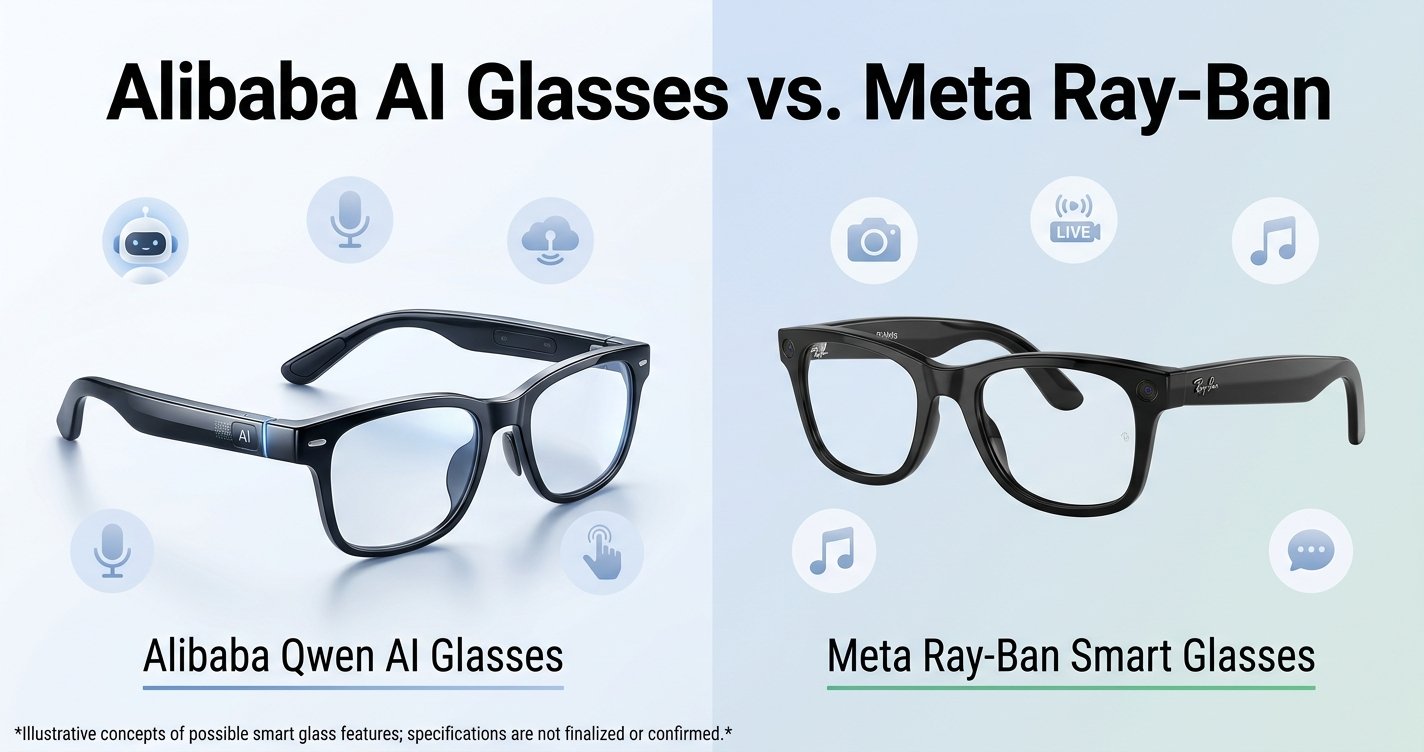
Meta has already set up a strong presence in consumer smart glasses. Its Ray-Ban partnership combines familiar eyewear styling with cameras, audio, and AI capabilities.
Alibaba is taking a related technique but has a one-of-a-kind approach behind its product. Its Qwen AI Glasses S1
era connects the glasses to a broader method concerning AI assistants, shopping, and virtual services.
The ability variations are worth thinking about:
- AI integration: Alibaba is positioning Qwen because the assistant is at the center of its wearable reveal.
- Shopping and bills: Alibaba’s commerce ecosystem should make connected shopping features a main selling point.
- Biometric functions: The S1 Pro’s said iris authentication and health monitoring ought to distinguish it from extra basic fashions.
- Market availability: Meta’s merchandise has a specific international footprint, whilst availability and supported offerings for Alibaba’s new series need to be checked by market.
There is no clean winner based on specs on my own. Software reliability, privacy, comfort, battery life, charging, and compatibility are just as important as the feature list.
Are Alibaba AI Glasses Worth Buying?
The answer depends on what you want from a wearable tool.
The S1 series may appeal to technology hobbyists, casual travelers, and customers who need hands-free photos or handy access to AI assistance. The Pro model could enchant consumers especially interested in its additional interaction and biometric functions.
On the other hand, anyone who mainly takes snapshots, translates occasional phrases, or asks an AI assistant simple questions may discover that a phone already meets those needs.
Before shopping, keep in mind those 5 factors:
- Confirm availability: Check whether the glasses are formally supported in your Country.
- Compare the full rate: Include taxes, delivery, import charges, and warranty costs.
- Check language guide: Make certain the AI and translation capabilities support your preferred languages.
- Review privacy controls: Understand camera signs, recording controls, and biometric data rules.
- Wait for unbiased reviews: Look for proven digicam samples, battery checks, comparison tests, and software critiques.
At about $450 less than the competition, the glasses aim to deliver more than a novelty experience. Their cost will depend on how well their functions fit into your everyday habits.
FAQs About Qwen AI Glasses S1
What is the price of Alibaba AI glasses?
Bloomberg reported an initial price of ¥3,799 or about $537 before discounts. Promotional offers and subsidies may additionally affect the final price in China.
What is the difference between Qwen Glasses S1 and S1 Pro?
The widely available S1 focuses on core AI and camera functions. The S1 Pro adds reported capabilities along with eye monitoring, iris-based totally fee authentication, and health monitoring.
Can Alibaba AI glasses translate conversations?
Reported capabilities include translation gear powered via Alibaba’s AI era. Supported languages, connection requirements, ts and performance should be confirmed for the intended market.
Conclusion: Qwen AI Glasses S1
Alibaba’s Qwen Glasses S1 collection represents every other step within the race to make synthetic intelligence a part of normal lifestyles. a 50MP digital camera, Qwen AI assistance, translation, tools, and additional capabilities in the Pro model, the goal is to be more than traditional eyewear.
Their maximum thrilling benefit can be the relationship between wearable hardware and Alibaba’s broader digital offerings. Yet a top-class charge also raises questions about battery life, privacy, international availability, and long-term usefulness.
For now, the S1 series is worth watching, particularly for customers interested in arms-unfastened AI and linked purchasing. Independent reviews and broader availability will help determine whether or not those glasses are a virtually beneficial upgrade or, without a doubt, any other machine competing for space on your bag.
Want to keep up with the next wave of AI gadgets? Follow TachCrunch for technology news, product developments, and practical analysis of the devices shaping the future.