
Introduction: New York will independently test AI models
AI is already part of your everyday life here in the U.S. In fact, AI is used everywhere from business to science, healthcare, education, and many other areas. As AI systems become more advanced, many will focus on the safety, transparency, and risks involved. Now, New York is launching a new project to test AI models rather than having technology companies test their own models. According to TachCrunch.com, the project will foster greater accountability in AI research, scientific evaluation, and transparency.
Google Doctor Graduate: We offered the examination on the back of its personal yard already; nevertheless, sometimes you really have several googles, but there’s possibly a window or maybe a great fridge. Google Doctor: To stay updated on any information related to Google, do stay subscribed to our website for the latest updates. To join, registration is open.
The objective of the project is to promote research on safe AI, identify risks, and provide government decision-makers with scientific understanding of how strong AI systems work. The project will also explore the use of AI in health and scientific discovery.
News is breaking new ground in the growing debate over independent AI testing in the US. As tech companies keep pushing the capabilities of new models, independent tests could help consumers and policymakers get a better sense of what the models can and can’t do.
Why New York Wants Independent AI Model Testing
Some AI companies have published details about their systems – like safety tests, performance metrics,s and technical specifications. But there’s still the thorny question of whether these results, administered by the companies themselves, are an accurate reflection of how the systems will behave in the real world.
Some AI applications may perform well in a testing environment, but then suddenly break down in high-pressure situations when individuals depend on it to complete difficult tasks. Some may generate incorrect information, be unable to handle certain prompts, give away sensitive data, or respond in a manner that raises safety concerns.
We can test it ourselves thoroughly through AI to make additional tests.
Instead of depending on what developers said in reports, scientists keep an eye on advanced systems, understand their vulnerabilities, and figure out how to test them for safety and security.
“Technology can be so powerful that it can be a little scary. And when that’s the case, we want the public to know that we are doing everything possible to ensure that technology is safe,” said Governor Kathy Hochul in a press release at the announcement.
The intended purpose of the new rule is to make it easier for researchers to evaluate sophisticated AI systems and to help government officials come up with an informed prediction as to what the technology is capable of doing.
Binghamton University Will Lead the New AI Research Initiative

New York Center for AI Responsibility and Research will be housed at Binghamton University, a State University of New York campus.
This facility will host around 80-plus scientists and researchers from different institutions within the state. The researchers are focused on artificial intelligence, computer science, cybersecurity, and similar fields.
There will be two interim co-directors with expertise in computer science:
Greg Morrisett, Dean and Vice Provost of Cornell Tech
Jeannette Wing. Executive Vice President for Research, Columbia University.
They will contribute to determining the research agenda of the Center, to managing independent evaluation efforts, and to establishing a network of expert academics across the state.
Rather than collecting all the research at one university, the project will combine specialists from various institutions. Researchers with a range of skills in technologies will be able to work together on AI safety and security projects.
The center will deliver essential training to the next generation of AI safety researchers. As artificial intelligence grows in popularity, so is the need for people with experience in future-facing AI systems, security, and model assessment.
The Function of Empire AI within Independent AI Testing
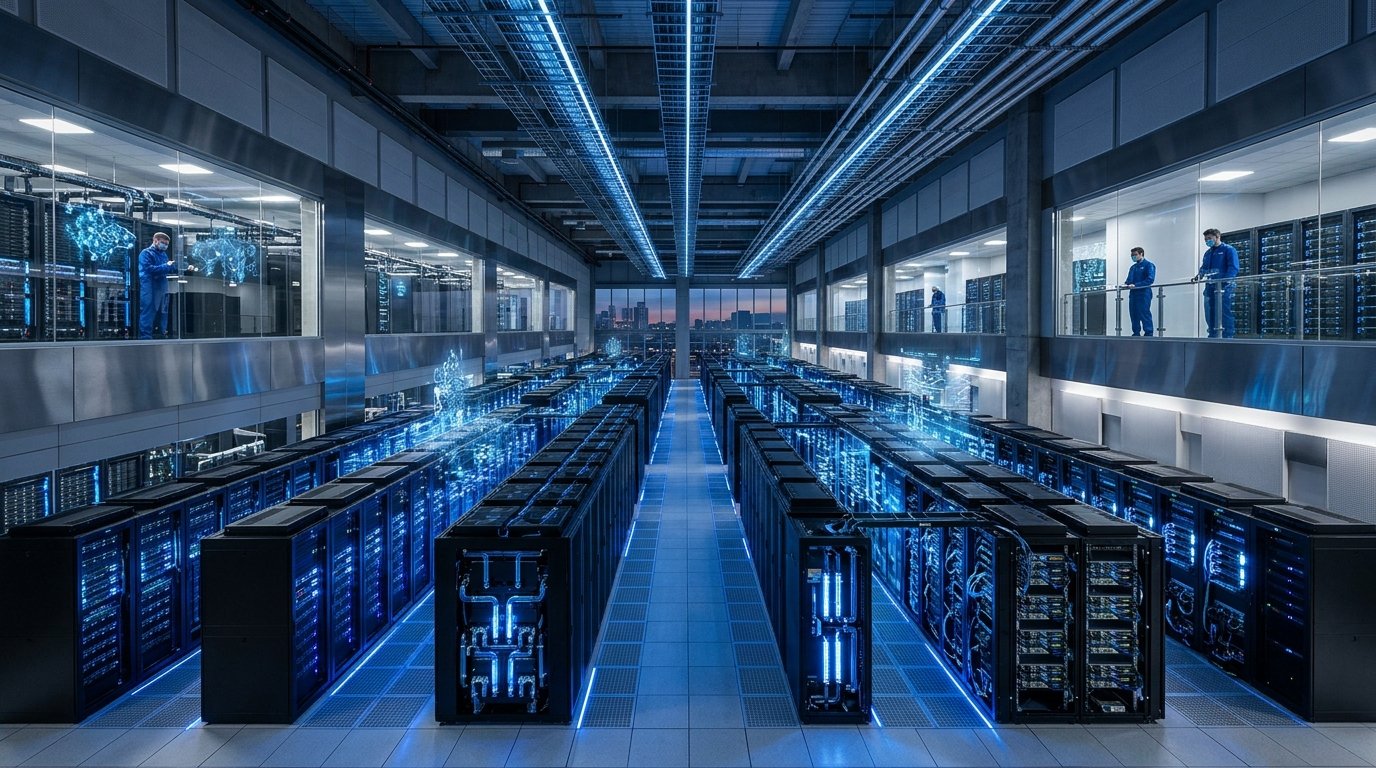
It is also necessary to test advanced artificial intelligence systems. This could require significant hardware, technical infrastructure, and research resources to test the high-end models.
New York will also join Empire AI, a $500 million public-private partnership to fund AI research for the public good, to help raise money for the new center.
Empire AI is available for any participating academic institutions to use their computer resources for scientific research and experiments.
With this infrastructure and the expertise of researchers across the state, New York will be able to develop better methods for understanding complex AI systems.
This work will include exploring what these technologies are, identifying their risks and developing measurements of their behaviour.
Furthermore, the team will create methods for judging if the findings of the AI system are accurate and whether the results look like they are working properly. This sort of assessment, the authors point out, could be required as the AI system gains the ability to perform more complex actions and communicate with other systems.
This project is a continuation of previous investments in the research center. In January 2026, New York revealed its establishment with philanthropy totaling $30 million, including Binghamton alumnus Tom Secunda and a $25 million research investment from SUNY.
What Will Researchers Examine in Advanced AI Models?

Beyond measuring the correctness of a system’s answers, independent testing of the AI model includes understanding the reasoning of models to various instructions, managing ambiguous information, and testing its behaviour under adverse conditions.
In New York, the research lab will create new scientific metrics for benchmarking more advanced AIs.
Several important areas will receive attention.
1. AI Safety & Security
The advanced AI systems will be analyzed for potential risks. Researchers will explore vulnerabilities for users, companies, and digital infrastructure.
Security testing can identify models that are inconsistent in their behavior or susceptible to abuse.
2. Model Reliability and Performance
As AI algorithms are more and more incorporated into systems that support decision-making, the question of their trustworthiness becomes relevant.
Their response can be checked for consistency, whether they follow instructions, and how the model expresses uncertainty.
3. Privacy and Data Protection
Machine learning models could potentially access private information of people and businesses.
Research into privacy and hardware security may be able to discover vulnerabilities, weaknesses that can lead to confidential information being leaked or exploited for unauthorised access.
4. Interpretability and Alignment
It is also essential to answer the other question of why an AI system has given a specific output.
Interpretability research aims to make it easier to understand model behavior. Alignment research asks whether systems act as they are supposed to and meet safety specifications.
Such regions will help researchers better understand more and more complex AI systems.
5. Scientific & Medical Applications
This will not be the sole focus of the center.
It will examine the role of artificial intelligence in helping to make scientific discovery and responsible use in medicine.
AI systems have the potential to assist researchers in discovering, exploring, and understanding complex data and addressing scientific questions, as well as to make some aspects of research faster. When applied to sensitive fields, this potential must be evaluated and managed by humans.
The RAISE Act Adds New Transparency Requirements for AI Companies

The independent AI testing project in New York is part of a broader push for safety and transparency standards for large AI developers.
The Responsible AI Safety and Education (RAISE) Act was signed into law by Governor Hochul in December 2025. It mandates the disclosure of information regarding safety frameworks, reporting of key safety incidents by major developers of the most advanced, or “frontier,” AI models, and other requirements.
Covered companies must report qualifying critical safety incidents to the state within 72 hours of confirming that such an incident has occurred.
On November 10, 2026, New York also stated that an online portal for registration for large frontier AI developers was now open. Any company subject to the relevant requirements is required to register by 1 January 2027.
The Office of Digital Innovation, Governance, Integrity and Trust (DIGIT) will be responsible for implementing these obligations.
Starting in January 2027, covered developers will have even more transparency and reporting requirements, including publishing a safety framework and model transparency reports.
This will give regulators better insight into the development and use of sophisticated AI.
For the public, more transparency could improve understanding of the safety protocols that companies have to safely release advanced AI systems.
Can Independent Researchers Test Every AI Model?
While New York’s plans to evaluate AIs with a new test, independent testing will also have constraints.
This is an important challenge.
Availability of the developed system: Technology corporations are not able to release all models, research items, or development systems to the public. Researchers who are not employed by technology companies might not be able to analyze the non-released systems.
Open access safety and transparency reports may be helpful, but they do not necessarily reveal everything about how the testing for a company is done.
This highlights a clear difference between assessing committed-to-disclose AIs and independently scrutinizing each model under construction.
While the RAISE Act might provide New York regulators with more information, the fact that a use case is disclosed does not ensure that researchers will have free access to all future AI systems.
A final issue is the rapid pace of technology. Technological developments and capabilities can change quickly, so evaluation methods may need to change just as quickly.
What passes today’s tests might not pass others tomorrow. A single, preliminary testing tool is unlikely to keep up with the increasingly sophisticated functions of newer generations of AI models.
Therefore, ongoing research and revised evaluation criteria will be relevant to the center’s future goals.
Could Other US States Follow New York’s Approach?
The regulation of artificial intelligence is a key concern throughout the United States.
States are also considering how to mitigate the risks of complex AI systems by requiring information disclosures, establishing safety frameworks, and introducing incident reporting.
California and Illinois. California and Illinois have moved on frontier AI safety and accountability.
This adds a new layer by creating an academic research center with a distinct mission to assess cutting-edge AI systems.
It could also garner attention from other states and academic institutions if its research results in practical evidence and reliable testing procedures.
However, the respective states might decide to take varying decisions depending on their legal conditions, the research facilities, and technology sectors.
At the larger level, the question is how do you promote AI innovation while also making sure that this ultimately leads to well-built and responsibly used systems?
Conclusion
As the United States is testing its own AI in an announcement that’s expected to release some of the most powerful AI models publicly, New York made the decision to test its own AI tools independently. The state will have a new research center where 80 researchers will examine models and their risks.
Together with the RAISE Act’s transparency and reporting mandates, this proposal provides an additional safeguard on the use of covered AI developers within the state of New York.
Remaining issues of model access, the pace of innovation, and testing standards aside, independent research may still enable the public and policymakers to get a clearer sense of advanced AI systems.
What the following years will reveal is how much this approach can really protect safer, more transparent, and more accountable AI development.