

Introduction: Companies Replacing Workers With
Increasingly, companies are deploying artificial intelligence to do everything from replacing customer service reps and software developers to making hiring decisions, speeding up marketing and finance processes, and replacing workers altogether. Businesses are leveraging AI to perform many functions that human employees once handled.
The consequences are becoming harder to ignore. A handful of organizations have publicly linked using AI to downsized teams, minimized hiring, or fewer employees needed. Meanwhile, a few have revealed layoffs alongside a dash of AI – and that doesn’t necessarily mean the tech is directly responsible for displacing everyone.
In the report, TachCrunch.com examines companies that have associated workforce layoffs or changes with AI in 2025 and 2026, the industries undergoing the greatest transformations, and the implications of those changes.
How AI Is Changing the Workplace
AI applications are increasingly capable of performing more and more business functions. Chatbots can answer customer queries, generative AI can assist with the development of marketing content, and coding assistants can contribute to software engineering.
These tools could theoretically have benefits to companies, such as faster operation, lower costs, or improved productivity. A business might be able to achieve the same output with fewer workers, or may be able to use its existing workers on jobs that need human judgment.
But the impact on employment isn’t always simple. In some cases, firms lay off workers because AI is capable of doing the jobs. In others, companies shift investment from jobs to AI. Some, in fact, announced layoffs as a way to signal that AI is “disrupting” their businesses but isn’t actually replacing the workers involved.
Knowing this can be useful when analyzing jobs lost to AI.
Tech and Software Companies Reshaping Their Workforces

1. Salesforce
Salesforce is the most talked-about case of how AI is transforming support.
Meanwhile, CEO Marc Benioff announced that the company had cut its customer-support employees from 9,000 to 5,000 as AI agents assumed much of the customer-service burden. Cloudflare is advocating Agentforce, its platform for AI-powered business agents.
In February 2026, Salesforce announced it would be laying off a further 1,000 employees in several divisions. The company told Fortune that Agentforce had helped reduce support cases it had to address, so Salesforce did not have to fill some support engineer jobs.
This is an example of how automation may affect the need for human labor, even if a company does not account for every job eliminated as a direct job replacement.
2. Oracle
Oracle is yet another giant firm tying artificial intelligence to labor changes.
However, as pointed out in its annual report for FY2026, Oracle said that the progress and implementation of AI had led and might lead to Oracle’s workforce decreasing.
In the filing, the company revealed that its worldwide headcount dropped by around 21,000 in the prior 12 months. Nevertheless, it’s not establishing that AI was solely responsible for the different cuts.
The case of Oracle illustrates how huge technology companies are restructuring their activities and growing their AI platform and offerings.
3. Block
Block, a financial technology company founded by Jack Dorsey, has said it would lay off about 40% of its 4,000 employees, or 4,000 jobs, as of February 2026.
Dorsey attributed the decision to the expanding powers of AI tools. Intelligent tools, with their more compact and flatter teams, he said, were already transforming the way the company could design and manage its business.
Block’s announcement became a high-profile case of a company speaking publicly about the connection between AI productivity and a smaller workforce.
4. Atlassian
Atlassian, which owns tools like Jira and Trello, announced in March 2026 that it would cut about 1,600 jobs (roughly 10% of its workforce).
The company called it a workforce restructuring, which would shift its focus to AI and enterprise sales.
The leader of Atlassian also said that the technology would alter the required skills and roles of companies. However, Atlassian did not characterize it as an example of AI replacing every impacted worker.
5. Cloudflare
Cloudflare laid off workers in 2026 as it reshaped its organization for what its executives called the agentic AI era.
“The new structure is not about cost reduction, nor performance review,” the company’s leadership said. “It is a reflection of the evolution of a high-growth company and how it might create value as the AI capacity continues to evolve.”
However, just as Cloudflare’s example shows, how organizations are restructured will depend on how a company’s rationale for cutting roles is expressed.
E-commerce and Retail Companies
6. Amazon
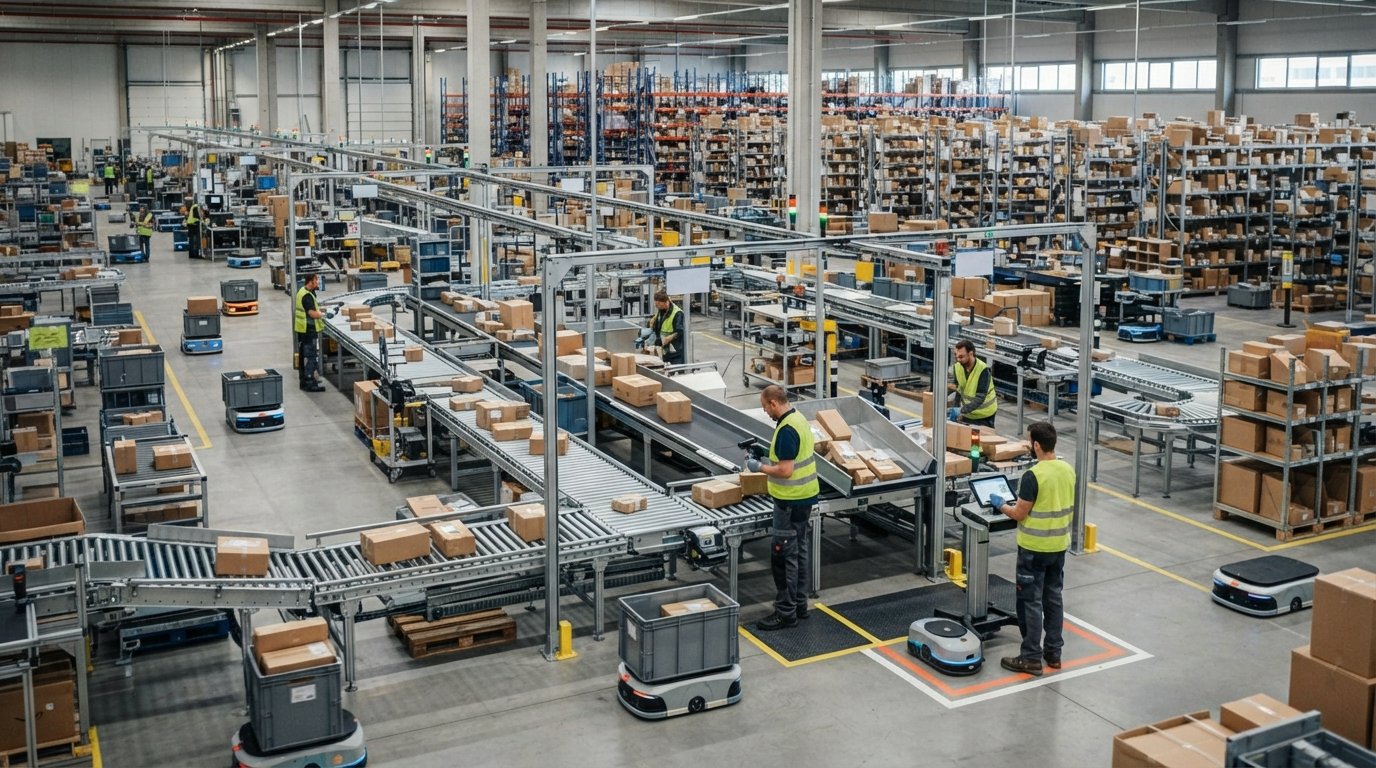
Amazon has already spoken out about how it might automate some corporate processes using artificial intelligence and therefore need fewer employees.
In a blog post, CEO Andy Jassy said the company is launching more generative-AI tools and “AI agents,” which may lead to some roles needing fewer staff. He also said that efficiencies from greater use of AI could decrease Amazon’s overall corporate workforce.
The company revealed 14,000 corporate layoffs in October 2025 and an additional 16,000 in January 2026. Amazon associated its wide-ranging restructuring efforts with a leaner organization, a decreased number of management tiers, and a more efficient company.
However, not every job eliminated could be directly linked to AI; the company’s own pronouncements have made its use of AI a key part of the debate around its workforce.
7. IKEA
IKEA serves as an example of how companies can use AI even if they don’t want to cut workers.
The furniture store chain launched an AI bot, Billie, to respond to customer service inquiries. Instead of using automation as a tool to replace workers, IKEA also said it would retrain some of the customer service representatives for new jobs, such as offering interior design recommendations.
This demonstrates how the adoption of AI can alter the role of current employees and facilitate worker migration to other jobs.
8. Dukaan
In 2023, Indian e-commerce platform Dukaan drew headlines when CEO Summit Shah revealed that the business had replaced nearly 90% of its customer support staff with an in-house chatbot.
But Shah claimed that the chatbot saved businesses money and sped up their customer service. The announcement turned into a popular example of a company using AI to replace human workers.
Even though this is an example from before 2025, it demonstrates how the replacement of AI customer service actually occurred before the current wave of workplace change.
Education and Online Services

9. Chegg
Chegg, an online education firm, has been under tremendous pressure as students turn to AI helpers for answers and assignment completions.
It said it would significantly reduce its workforce, with plans to lay off about 45% of its staff in 2025. The company cited market trends, increasing prominence of AI, and reduction in internet search traffic as reasons for restructuring.
Chegg provides an example of how AI can impact jobs in two ways: by replacing jobs within a company, and by creating shifts in customer behavior that threaten the long-term viability of a current business model.
10. Duolingo
Language learning platform Duolingo took an AI push with some parts of its content production.
In 2024, the company said it would cut its number of contractors by nearly 10% and use AI to aid in translating the content, the company said in a statement. A spokesperson for the company said that AI was involved in that process.
This case is relevant because it indicates that changes to the workforce related to AI can impact contractors or freelancers as much as they do employees.
Finance and Customer Service
11. Klarna
Klarna has been the most prominent example of AI used in customer service.
It said it had deployed an AI assistant capable of doing the work of some 700 full-time customer service representatives. The assistant was able to answer customer questions, support requests, and more.
Klarna was a high-profile example because it showed how AI can rapidly lead to the creation of huge support teams.
But it’s worth noting that the company’s claims about increased productivity from AI should be viewed independently from the verified number of employees who were fired due to AI.
12. Block’s Broader Effects on Financial Services
Block’s layoffs are part of a transition across financial technology. Firms in this category are examining AI for client service, fraud, risk, commerce, and back-office performance.
While these systems cut down on repetitive manual labor, they also drive employment for those who understand the systems, data, cybersecurity, and financial technology that are part of them.
The outcome could be reduced prospects in some historical roles coupled with increased prospects in technical and specialist roles.
Media and Marketing Companies
13. Blue Focus
Chinese marketing agency Blue Focus made headlines in 2023 after news emerged that it would cut back some of its human content-writing and design work using generative AI.
The company had been slowly increasing its AI offerings and advertising technology. Its reported change, though, prompted a wave of concern over whether traditional creative jobs were dead, particularly for ad and content producers.
Here’s an example of why writers, designers, and marketers are so fixated on AI that can generate text, images, and campaign ideas.
14. Pinterest
Pinterest revealed layoffs in January 2026 as it noted that it was shifting resources to AI teams and to AI products.
In its announcement, the company explained the transformation of its sales and marketing model. In fact, it is part of a broader trend in which technology firms are redirecting expenses and employees to AI.
But a strategic move into AI does not necessarily mean that it was AI that performed, with employees who lost their jobs having done everything.
Companies Planning Further AI-Driven Changes
There has been speculation from a few companies about future workforce reductions related to automation and AI, but none have announced that all the layoffs are complete.
IBM
For example, IBM has previously said that it planned to automate some back-office tasks, such as some human resources work. In 2023, CEO Arvind Krishna said some back-office jobs could be replaced with AI over time.
Aside from the company’s plans, it shows that administrative and mundane tasks could also see more automation. IBM also plans to increase hiring in the fields of AI and hybrid cloud.
Verizon
Verizon leadership has spoken about the potential for AI to replace some of the more process-oriented aspects of a job, such as elements of customer service.
Such remarks indicate that perhaps there is a change in where telecommunications companies may position their customers. Nevertheless, a glimpse into the future should not be mistaken for a full replacement.
HP
In November 2025, HP disclosed its intention to cut approximately 4,000 to 6,000 jobs from its corporate staff by 2028.
AI was seen by the company as a way to enhance productivity, speed up the pace of product innovation, and boost customer satisfaction. Accordingly, the restructuring was part of a larger initiative to integrate AI into the organization.
Does AI Always Mean Job Losses?
Not so sure. If you thought there was a clear-cut connection between robots and jobs, think again.
Some firms cut jobs by deploying AI. Others merely employ AI to speed up the work of their existing workers. Firms could cull jobs to pay for the technology, or create a new structure of product teams.
There are also examples of companies retraining workers instead of firing them. Moving customer service workers into other positions is one example shown by how IKEA does things.
And at the same time, new jobs related to AI are being produced in:
Artificial Intelligence Development And Engineering
- Managing and analyzing data
- Cybersecurity
- AI systems testing and evaluation
- Automation management
- AI governance and compliance
Businesses might alter the way they do business, so workers might have to learn new skills.
Which Jobs Are Most Exposed to AI Automation?

Automation is more likely to impact the jobs that are more repetitive, predictable, and digital.
Some examples include:
- Customer service: AI assistants can address frequently asked questions, field simple requests, and lead customers to pertinent content.
- Content creation: Generative AI can assist with product descriptions, marketing drafts, summaries, and other simple pieces of content.
- Administrative tasks: Scheduling, filing, data entry, and regular reporting are some of the standard tasks performed with the assistance of AI tools.
- Software development: Coding helpers can write code, troubleshoot problems, and help with testing. Humans still have a part to play in reading, designing, and maintaining complicated systems.
- AI can translate large amounts of text, though human support is often recommended for its accuracy, tone, and cultural and local considerations.
However, different jobs and employers hold different levels of risk. A lot of job roles mix routine, repetitive work with communication, accountability, judgment, and creative thinking.
What Workers Can Do to Prepare for AI Changes
AI is here to stay in most industry operations. Your employees don’t have to be AI engineers to adapt; they just need to understand how these tools work.
A few practical steps can make a difference:
- Identify helpful AI tools: Discover how AI assistants will help you do your routine work.
- Human skills: Communication, problem-solving, leadership, and critical thinking are still in high demand.
- Enhance your digital awareness: Get acquainted with automation, data, and security, and the technology used in your current occupation.
- Continue sharpening your skills: Stay abreast of developments in your field and seek out relevant courses whenever you can.
- Be responsible with AI: Validate information from AI and be aware of privacy regulations concerning workplace technology.
The real aim is not just to attempt to beat AI, but to get a grip on what technology is doing to jobs – and how our human abilities can continue to have a role.
cancaluion
Here are the companies highlighted in this story that demonstrate the impact of artificial intelligence on hiring, customer service, content creation, software development,t and business operations.
A few workplaces associated their use of AI with layoffs. Still others reconfigured their staff while committing to AI, without having demonstrated that AI had indeed displaced all of those employees.
That point is important. Not every business downsizing is driven by AI, and not every AI implementation results in jobs lost. Still, it is evident that companies are transforming how they structure work.
The best answer for workers is to prepare by continuously learning, acquiring flexible skills, and becoming familiar with how artificial intelligence is being implemented in their field. For businesses, the challenge will be integrating new technology while ensuring fair and responsible use of labor.
TechCrunch.com will report on the news that’s shaping AI, business, and the future of work.