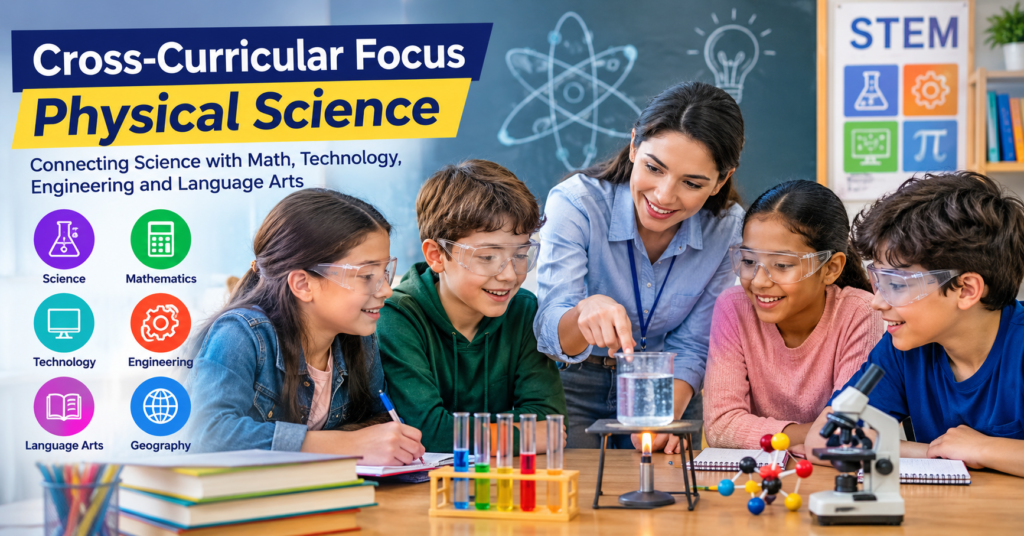
The interdisciplinary awareness of the Cross-Curricular physical sciences makes it simple for students to connect medical topics with topics they are already studying within the lecture hall. Instead of addressing technology as a separate problem, instructors can integrate physical science information with different areas of math, time, language arts, engineering, geography, and comprehension. This technique allows students to learn to address science needs in common situations and real-world problems. Physical production generally explores matter, flow, force, motion, waves, and chemical combinations, allowing for interdisciplinary play.
For students, those connections can make difficult requirements much less difficult to understand and more necessary. For teachers, interdisciplinary assignments provide an opportunity to develop more skills through interests. In this edition, TachCrunch.Com explores physical and technological knowledge, what drives curriculum cognition, why topics, what topics relate to physical and technological knowledge, and how educators can create engaging activities that encourage curiosity, problem-solving, creativity, and the power of STEM memory, and Cross-Curricular more.
What Is a Cross-Curricular Focus in Physical Science?
The cross-curricular approach connects physiological and technical concepts to the learning objectives of the various disciplines.
For example, a kinesthetic lesson should include mathematics by asking students to calculate speed.
By examining how electrical devices use electricity, the idea of electricity can become a part of time.
Similarly, university students can write a scientific look-alike report as part of the language arts interest.
The intention is certainly not to add extraneous factors to the doctrine of technical expertise.
Instead, students want to learn how individual fields of information can be described together to provide reasons for real-world situations.
Why Cross-Curricular Physical Science Matters
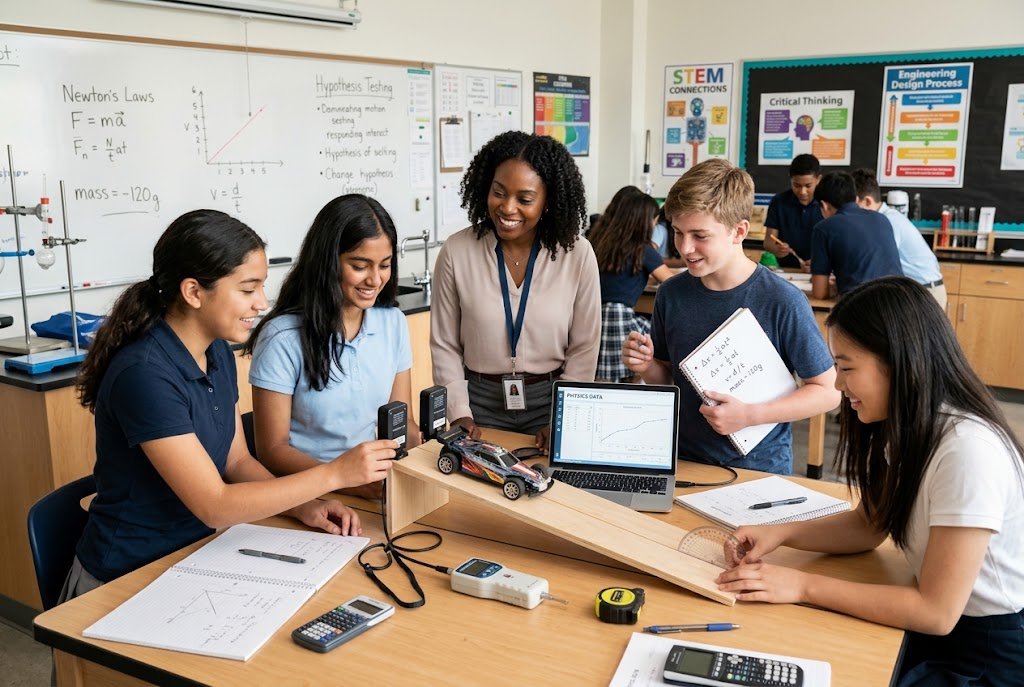
Physical and technical knowledge is composed of many principles that simply overlap with other disciplines.
Students want mathematics to capture measurements, graphs, formulas, and statistics on a regular basis.
You can use your writing skills to review tests and draw conclusions.
Technology can help them access information, simulate behavior, or design responses.
This makes the physiological sciences an excellent basis for interdisciplinary expertise.
A move-course method can also help students acquire facts that are not divided into remote classes outside the classroom.
In real life, it often takes many special skills to solve a problem at the same time.
Physical Science and Mathematics
Mathematics is one of the strongest connections to physical science.
Students can use mathematical reasoning to explore: Cross-Curricular
- Speed
- Distance
- Time
- Mass
- Volume
- Temperature
- Density
- Force
- Energy
For example, students studying motion can measure how far an object travels and how long it takes.
They can then calculate its speed using the appropriate formula.
Creating tables and graphs also helps students understand scientific data.
This combination allows students to practice mathematics while applying it to a physical situation.
Physical Science and Technology
Advanced Technological Knowledge: Technology plays an important role in the classroom.
Students can use digital tools to make measurements, make graphs, simulations, and data analysis results.
Research on renewable energy technology, for example, emphasizes the theory of physical technology.
Students can possibly stick to how solar panels convert daylight hours into electricity.
They could then make a presentation explaining and evaluating the characteristics of renewable and non-renewable energy sources.
This method develops every medical expertise and digital literacy.
Physical Science and Engineering
Engineering gives us a natural connection to something else. Cross-Curricular
Physical science knowledge interprets standards, while engineering generally uses individual standards for presentation and design.
An instructor will post a figure to help students with leading weights.
Students will no longer forget force, matter, balance, and dimension.
They have to build a prototype, test it, discover weaknesses, and rebuild.
Such activities often train university students in engineering design methods and empower physical and technical experts.
Physical Science and Language Arts
Also, college students with technical knowledge need strong oral communication skills.
Language can be taken as follows: Cross-Curricular
- Laboratory Reports
- Research paper
- Science lectures
- Presentation:
- Glossary Athletic Training
- Interests in Communication
After completing the experiment, college students can write a short file outlining their hypotheses, strategies, observations, and objectives.
This requires them to actually state scientific data.
Teachers can also ask students to give an explanation of a difficult concept in their own individual sentences.
Thus, within the techno-understanding mode, writing becomes an opportunity for clearer understanding instead of an honest completion of a writing exercise.
Physical Science and Geography
Geography can help students understand how physical technological knowledge affects specific areas.
For example, college students studying weather and forces can study the climate for unusual elements in the United States.
A renewable energy inspector can investigate why certain areas are primarily suitable for solar or wind energy.
Students can view maps, weather information, geographical features, and energy production.
This allows clinical concepts to be linked to physiological conditions.
Physical Science and Environmental Studies
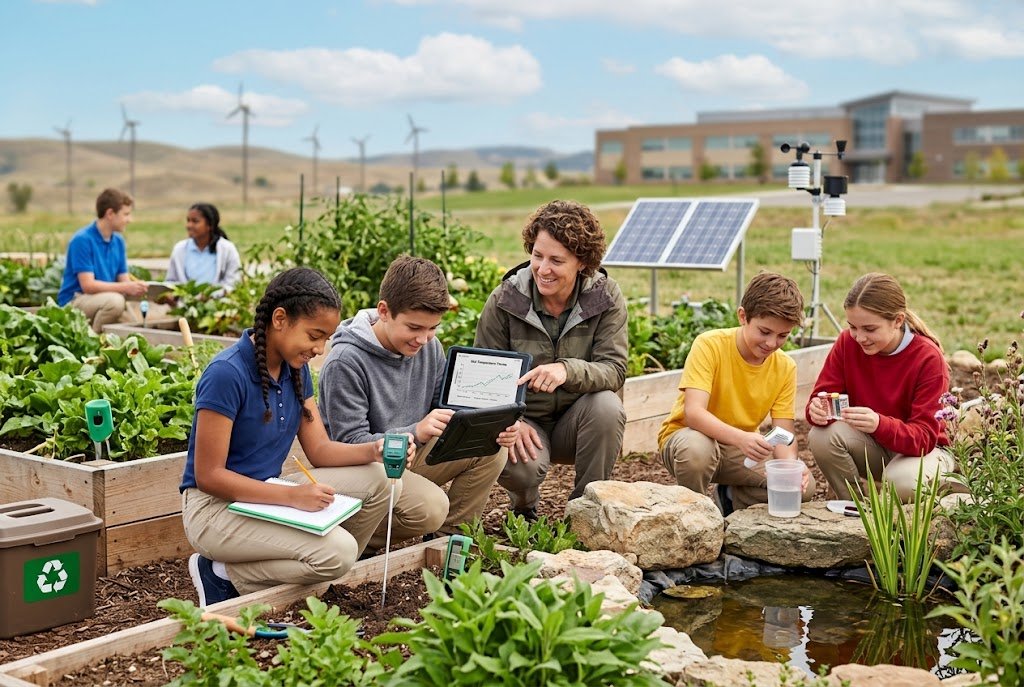
Environmental education is another valuable field.
Physical science concepts with pressure, tangibility, temperature, and chemical reactions can help university students detect environmental problems.
For example, university students can study how electricity consumption affects businesses.
They can test traditional energy sources with renewable electricity options and observe their advantages and disadvantages.
One initiative will likely ask students to create a plan to reduce electricity consumption within the civil engineering department.
It combines technical understanding, reading, math, and discrete problem-solving.
Hands-On Interdisciplinary Play
The hands-on experience could make the interdisciplinary study more powerful. Cross-Curricular
Build a Simple Bridge
Students can build small bridges using lecture hall materials.
They can observe the strengths of physical and technical knowledge, calculate mathematical measurements, and practice engineering concepts to improve their designs.
Look at heat transfer
Students can evaluate how male or female materials respond to heat.
They can document temperatures, make graphs, and provide interpretations of their observations in writing.
This hobby combines technical knowledge, mathematics, and language arts.
Designing a Solar Oven
Students can investigate the intensity of the sun with the help of a simple solar oven design.
They can calculate power settings, step temperature changes, effects, and give an explanation of how their setup works.
This activity links technical knowledge with engineering and environmental school teaching.
Cross-Curricular Learning and STEM
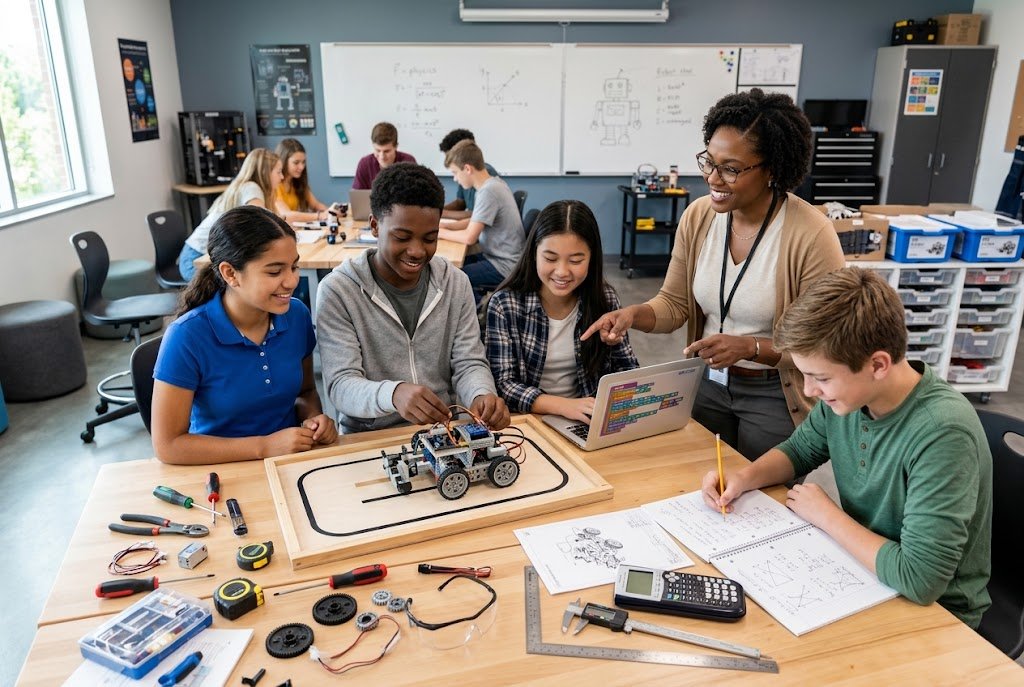
Interdisciplinary physiology certainly fits within a STEM school.
STEM combines: Cross-Curricular
- Science
- Technology
- Engineering
- Mathematics
Physical and technical expertise can attract all 4 areas through one task.
For example, students designing a small electric car will likely look at forces and currents, spend their time learning about materials, look at engineering concepts for building the car, and use math to verify efficiency.
Interest is also important because students are not perfect for record checks.
They use data to address a disorder.
The Role of Problem Solving
Problem solving is an essential outcome of walking the path.
Physics allows college students to explore questions and find sensible answers.
Instead of directly asking students to memorize the definition of stress, teachers can provide them with concrete game activities.
For example: Cross-Curricular
How are you able to configure the ramp so that the object can travel a certain distance?
Students must be tested, measured, managed, and evaluated.
This additionally enhances mathematical and engineering skills as well as encouraging medical thinking.
Using Real-World Examples
Real-life examples can make it harder to try to walk the road, to say the least.
Teachers can often say, e.g. Cross-Curricular
- Electric Vehicles
- Solar Panel
- Air generators
- The bridge
- Home Family Products
- weather structure
- Game system
- Building materials
The game could use a lesson about stress.
Students can highlight how pressure affects the motion of a soccer ball or baseball.
Electrical considerations can be a small look at how electric vehicles use power and how they behave.
These examples help university students analyze the physical sciences outside the classroom.
Assessment in Interdisciplinary Physics
The assessment shall measure task-relevant scientific expertise and skills.
Teachers can evaluate: Cross-Curricular
- Scientific Accuracy
- Mathematical calculations
- Change is punishment.
- Script Factors
- Troubleshooting
- Creativity
- Teamwork
- Final Company Process
A handy rubric can help students understand expectations before starting a hobby.
Teachers can use short quizzes, demonstrations, lab assessments, and performance demonstrations.
Benefits for Students Cross-Curricular
Interdisciplinary physics offers many advantages.
Subscription
Students can methodize the idea from a methodological perspective.
Improve Critical Thinking
They need to examine the data and determine how certain capabilities can be leveraged together.
Multiple networks
In practical tasks, there are often more meaningful explanations than memorizing definitions.
Communication is improved
Students explain clinical ideas through speaking and writing.
STEM Preparation
Interdisciplinary video games introduce generation, timing, and skills used in engineering and math careers.
FAQs About Cross-Curricular
1. What advice do you give about shifting the focus to physical and technical knowledge?
This approach combines physical science ideas with disciplines including math, age, engineering, language arts, and geography.
2. Switch courses. Why is physical and technical knowledge useful?
It allows college students to practice scientific knowledge about real-world problems and to develop critical thinking, dialogue, math, and problem-solving skills.
3. Easy course to pass physical generation What is a hobby?
Students can lay out a small bridge, evaluate its functionality, calculate its impact, and write a program explaining the technical expertise behind its design.
Conclusions: Cross-Curricular
Bypass directional awareness in the physiological sciences provides students with a broader and more practical way to discover clinical ideas. By combining physical technological understanding with mathematics, time, engineering, language arts, geography, and environmental studies, instructors can show college students how separate areas of understanding are connected.
Hands-on responsibilities, such as building bridges, finding heat switches, or building solar devices, can move students beyond memorization and apply standards to real-world situations. Most importantly, the introduction of affirmative action curriculum makes it less complicated for students to recognize that physical science is part of a normal lifestyle. With thoughtful planning and meaningful video games, educators can create practice that can be engaging, difficult, and valuable for college kids outside and within the lecture process.