
Artificial intelligence is based on effective computing hardware; however, building and running AI models may be costly. Developers want processors, specialised software, and reliable infrastructure to train and deploy AI models at scale. Nvidia has constructed a strong presence in this marketplace through its image-processing devices (GPUs) and CUDA software platform.
For readers following cutting-edge trends in synthetic intelligence and cloud technology, TachCrunch explores what Amazon TorchNeuron does, the way it actually works, and what it could suggest for the destiny of AI hardware.
Now, Amazon is making every attempt to compete for AI builders. On October 19, 2026, Amazon Web Services (AWS) delivered TorchNeuron, a software integration designed to assist developers in running present-day PyTorch applications on Amazon’s Trainium AI chips with minimal code adjustments.
The statement targets one of Nvidia’s largest competitive benefits: its hooked-up software environment. By making Trainium much less tough to apply with a familiar AI framework, Amazon hopes to give startups, researchers, and companies another opportunity for AI computing.
What Is Amazon TorchNeuron?
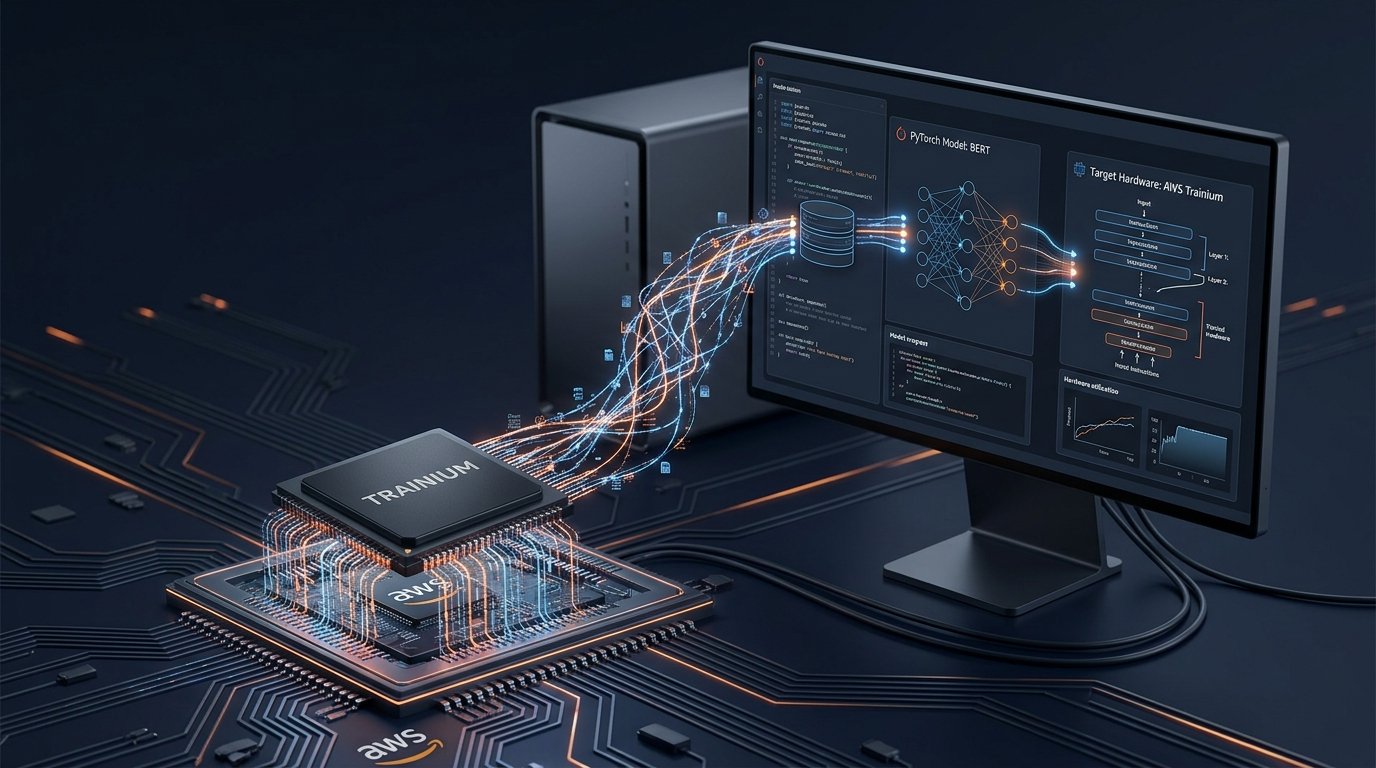
Amazon TorchNeuron is an open-source PyTorch backend for AWS Trainium. It connects the PyTorch system-level machine learning framework with Amazon’s custom AI processors, allowing supported packages to run on Trainium without requiring developers to rewrite their complete codebase.
PyTorch is a widely used framework for growing, education, and deploying artificial intelligence applications. However, packages constructed for one hardware platform may require more changes than they will need to run successfully on another. Those modifications can consist of software program application dependencies, hardware-unique operations, and overall performance optimizations.
TorchNeuron aims to simplify this method. Developers can use familiar PyTorch APIs and configure their packages to use Trainium via the Neuron tool backend.
AWS introduced TorchNeuron’s public beta through its Neuron 2.33 launch on October 19, 2026. The integration allows Trainium2 and Trainium3 and is designed for AI education and inference workloads.
The key difference is that TorchNeuron makes switching hardware much less difficult; however, it does not ensure that each version will run without modifications or deliver equal overall performance across structures.
Why Is Amazon Challenging Nvidia?
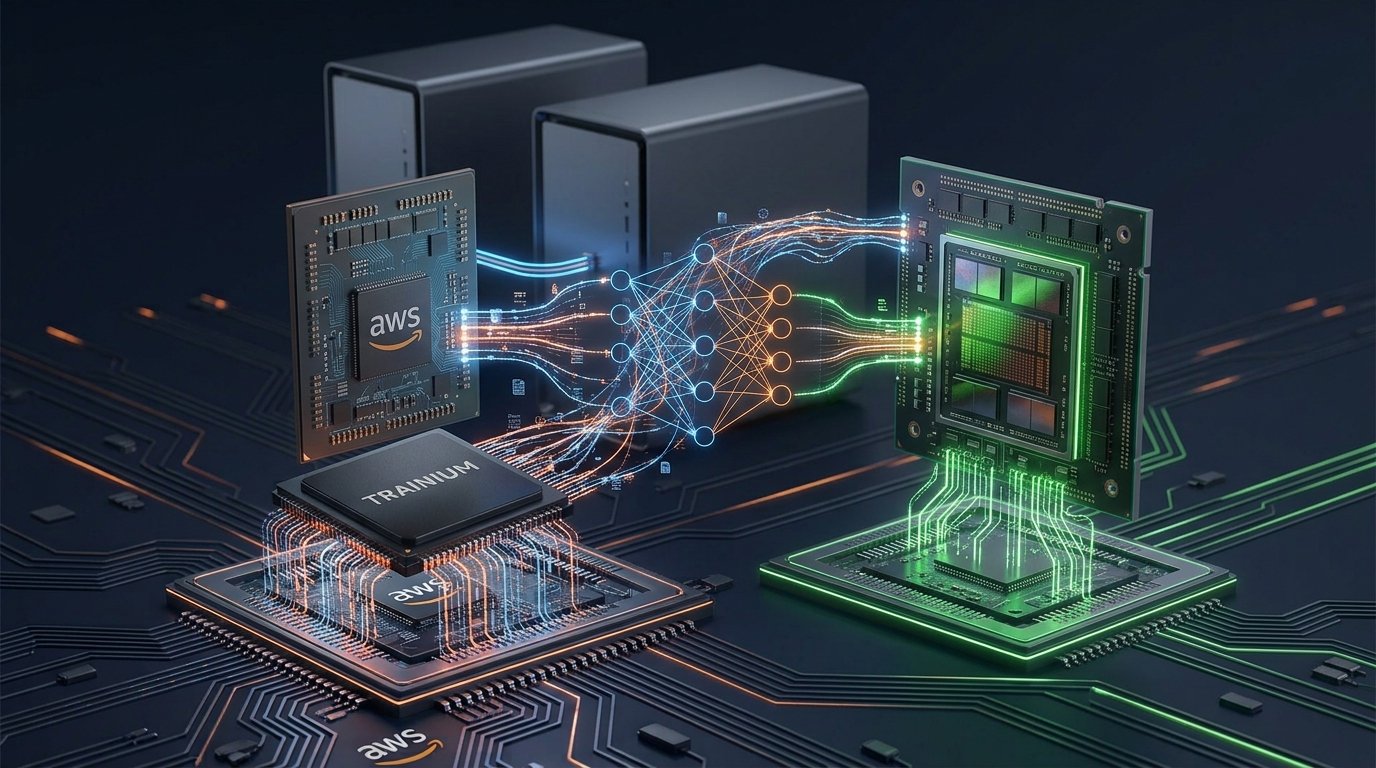
Nvidia has spent years growing the hardware and software infrastructure that enables modern-day AI computing. Its GPUs support many training and inference workloads, and CUDA presents developers with programming tools and optimized libraries for Nvidia hardware.
This mixture creates an effective environment. Developers can build on set-up equipment, use current documentation, and benefit from a big community acquainted with Nvidia-based total computing.
For groups considering options, the venture isn’t always truly shopping for an exclusive processor. They have to additionally decide whether or not their frameworks, libraries, development workflows, and manufacturing structures can perform successfully on the new hardware.
Amazon desires to lessen that barrier.
TorchNeuron gives PyTorch builders an additional direct way to test Trainium without rebuilding software from scratch. Instead of requiring organizations to analyze a unique programming workflow before evaluating Amazon’s chips, the integration builds on devices they will already use.
That should make Trainium more attractive to companies searching for extra infrastructure options. It additionally places greater strain on cloud vendors and chipmakers to compete on software usability, normal performance, and average rate as opposed to hardware specifications on their own.
How Does TorchNeuron Work With PyTorch
TorchNeuron registers Trainium as a native tool backend within PyTorch. This permits supported tensor operations and model workloads to use Amazon’s AI hardware through familiar framework interfaces.
A simplified workflow looks like this:
- Build the model: Developers create or hold an AI software program using PyTorch.
- Configure the tool: They configure supported workloads to apply the Neuron device as opposed to their cutting-edge accelerator.
- Execute the workload: TorchNeuron connects PyTorch operations with the Trainium software program stack and hardware.
TorchNeuron supports eager execution and the torch. It brings the workflow together, giving developers different strategies to run and optimize supported workloads.
However, hardware migration does call for careful checking. Unsupported operations, variations in typical overall performance, dependencies, and model-unique requirements will have an effect on the outcomes. Some applications may want extra optimization to obtain their preferred overall performance.
The practical advantage is a less difficult place to start for assessment, but it is no longer a guarantee that all migration pain points disappear.
What Are AWS Trainium Chips?
AWS Trainium is Amazon’s own family of custom processors designed for system-studying and artificial intelligence workloads. Amazon develops its own chips for use within its cloud infrastructure, offering clients an opportunity to rely completely on third-party AI accelerators.
Trainium is supposed to aid training duties, which include training big models and on-the-fly inference workloads. Inference is the process of using a trained model to generate predictions, responses, or different outputs.
TorchNeuron allows you to use this hardware with PyTorch, permitting developers to assess Trainium while continuing to apply familiar development tools.
The integration supports Trainium2 and Trainium3 instances. The generations provide AWS customers with options for deploying supported AI workloads in the company’s cloud environment.
For this purpose, developers should have a look at the complete computing environment instead of comparing chips in isolation.
Could Amazon TorchNeuron Reduce AI Computing Costs?
Computing charges can turn out to be a first-rate situation as AI products develop. Training models, processing large datasets, and serving masses or lots and lots of requests can require massive infrastructure resources.
TorchNeuron ought to assist agencies in looking at possible hardware without first running an intensive software program migration. Reducing the need to check each different platform might also make it easier to evaluate computing costs and performance.
One applicable instance comes from Deepgram, a voice AI employer strolling with AWS to run its Nova-3 speech-to-text version on Trainium2.
According to AWS’s October 19, 2026, engineering document, Deepgram’s optimized configuration processed between eleven% and 70% more audio per dollar than the computing options it had been using for its offline, throughput-oriented batch workloads. The cited result accompanied extra porting and overall performance optimization pain points; it has to now not be interpreted as a confident saving for each software program.
Amazon TorchNeuron vs. Nvidia CUDA
TorchNeuron and CUDA serve related but different purposes in the AI development ecosystem. TorchNeuron provides a native PyTorch backend for AWS Trainium, while CUDA is Nvidia’s broader software platform for programming and accelerating applications on Nvidia GPUs.
| Feature | Amazon TorchNeuron | Nvidia CUDA |
| Main purpose | PyTorch integration for Trainium | Programming and acceleration platform for Nvidia GPUs |
| Hardware focus | AWS Trainium2 and Trainium3 | Supported Nvidia GPUs |
| Developer approach | Standard PyTorch APIs through the Neuron backend | CUDA tools, libraries, and supported framework integrations |
| Main advantage | Easier evaluation of Amazon’s custom AI chips | Established hardware and software ecosystem |
| Key consideration | Workload support and AWS infrastructure requirements | GPU availability, costs, and platform requirements |
This assessment does not imply TorchNeuron replaces CUDA. The generation performs within one type of hardware ecosystem.
Nvidia benefits from years of developer adoption and a huge collection of software equipment. Amazon’s opportunity is to make Trainium an extra practical preference for builders who want to explore possible hardware without making big modifications to their present applications.
What Does TorchNeuron Mean for AI Startups?

Startups regularly need to balance computing fees with development velocity. A hardware platform may appear attractive on paper, but giant migration pain points could make switching tough for a small engineering crew.
TorchNeuron ought to provide startups with another way to evaluate AWS Trainium using existing PyTorch programs.
For instance, a voice AI employer ought to test whether or not its speech-processing models run successfully on Trainium. A research group needs to look at the platform for training workloads, at the same time as a generative AI enterprise needs to evaluate inference costs at some stage in supported cloud environments.
The key is measuring consequences beneath sensible situations.
Startups need to benchmark representative workloads, validate version accuracy, observe latency and throughput, and calculate the total cost of running their applications. They must also take a look at whether or not their favored libraries and model operations are supported.
Does TorchNeuron Mean Nvidia Will Lose Its AI Advantage?
Not usually. Amazon’s statement is a massive development in AI computing; however, it does not eliminate Nvidia’s competitive strengths.
Nvidia has an established ecosystem of GPUs, CUDA libraries, developer tools, and manufacturing deployments. Organizations with contemporary Nvidia infrastructure may additionally have teams and workflows constructed around that platform.
Amazon is addressing a selected obstacle: the pain points involved in adapting PyTorch programs to its custom AI chips.
If TorchNeuron makes that approach less hard and Trainium provides aggressive results for specific workloads, a few organizations can also decide on applications to AWS hardware. Others can also continue the use of Nvidia or adopt a combined infrastructure approach.
The final results will rely on measurable typical overall performance, value, reliability, hardware availability, and developer adoption over the years.
TorchNeuron consequently represents an aggressive possibility for Amazon in place of evidence that Nvidia’s AI gain has disappeared.
The Future of AI Chip Competition
The AI computing marketplace is growing past a unmarried hardware vendor. Cloud vendors are developing custom accelerators, at the same time as open-source communities and software program companies are working to make AI frameworks more flexible across one-of-a-kind hardware structures.
TorchNeuron is part of this broader shift. By integrating PyTorch with Trainium, Amazon is attempting to lessen the friction that can prevent you, developers, from experimenting with alternative AI processors.
The wider importance is that software compatibility is becoming an increasingly vital part of the AI hardware competition. Faster chips depend, however, on practical devices, predictable performance, and feasible operating fees.
For startups and corporations, more possible hardware alternatives may want to create more flexibility at the same time as deciding on which to train and install AI models.
Conclusion
Amazon TorchNeuron is a few other steps in AWS’s attempt to compete within the AI computing market. By connecting supported PyTorch packages with Trainium2 and Trainium3, Amazon is attempting to make its custom AI chips less difficult for developers to evaluate and adopt.
The functional benefit is greater flexibility. Startups and hooked-up companies may additionally gain another infrastructure choice without having to rebuild their packages from the ground up.
However, TorchNeuron does not robotically replace Nvidia GPUs or assure lower expenses for every workload. Developers should look at compatibility, standard overall performance, accuracy, and basic operating fees before making a decision.
As AI call for maintains to expand, the opposition among hardware organizations will increasingly rely upon the whole developer surroundings, which includes software programs, regular ordinary performance, and expenses.
Follow TachCrunch for added insights on artificial intelligence, cloud computing, startups, and the developing technology.
FAQs
What is Amazon TorchNeuron?
Amazon TorchNeuron is an open-source PyTorch backend that permits supported PyTorch programs to run on AWS Trainium AI chips.
Is Amazon TorchNeuron available to builders?
AWS announced TorchNeuron’s public beta in its Neuron 2.33 release on October 19, 2026. Developers need to seek recommendations from the official documentation for current setup commands and obstacles.
Which AWS chips does TorchNeuron support?
The modern-day AWS documentation identifies Trainium2 and Trainium3 instances as supported hardware.
Does TorchNeuron update Nvidia CUDA?
No. TorchNeuron connects PyTorch applications with AWS Trainium, on the identical time as CUDA is Nvidia’s software application platform for its GPUs. They serve special hardware ecosystems.