
Introduction: Anthropic FlashProve
AI is already pervasive in our daily lives, from drafting business reports and writing software to monitoring cybersecurity and guiding business decisions. But as AI models become more sophisticated, one important concern is emerging: how will we know which model actually produced the answer?
The company may assert that the software uses a sophisticated AI model, but, in practice, people have little way to verify this. For example, a service might replace an expensive model with a cheaper one without anyone noticing, or an attacker might tamper with a system and inject responses from an illicit model.
In response to this alarming trend, Anthropic is developing an open-source technology named Flash Prove. The study seeks to build a more dependable method of confirming the source of an AI’s output by utilizing cryptographic proofs that can reveal whether a given response was produced by a certain model.
It’s an interesting milestone in the development of better, more trustworthy, and more transparent AI. It might also help businesses, developers, independent researchers, and regulators understand what AI systems are really up to.
What Is Anthropic Flash Prove?
About Anthropic Flash Prove: Flash Prove is an experimental system for artificial intelligence model verification based on provable inference.
Put simply, provable inference is when an AI provider can produce a cryptographic proof that a certain model produced a certain output. Rather than users having to trust a company’s statement, they can mathematically verify if those claims are true.
This is all the more important in the case of contemporary AI models, which are usually interacted with via online services. When you ask a question, you only find out what answer you received, with what model, and when you get it.
They might purchase access to a more complex AI model because they require a comprehensive investigation, complex reasoning, or security analysis. However, the service provider might be able to give that request to a cheaper model without notifying the customer.
Flash Prove should be used to avoid this form of covert model interchange.
Anthropic unveiled its findings in a paper published on 2 November 2026 detailing how cryptography could enable cross-checking of outputs without exposing proprietary AI weights.
The manufacturer says this is ongoing research, not a finished commercial product.
Importance of AI Model Identity Verification
For more delicate and complex tasks, AI model identification is gaining significance.
AI models vary in their capabilities, performance, and security. While a lower-power model might suffice for simple support, a higher-powered model could be required for, for example, complex software development or cybersecurity investigations.
In the case of subscriptions, clients pay for a type of service and therefore reasonably assume the service will provide what they paid for.
Without reliable verification, several problems can arise.
1. Safeguarding Against Model Hiding
Running the most advanced AI models can be costly, in both computing power and operational costs. There may also be financial reasons to switch a costly model for a cheaper one.
For instance, a customer may buy access to a large, high-quality model of AI and be instead provided with answers that come from a tiny one.
Even if those answers look convincing, the model might be reasoning in a totally different way.
Flash Prove wants to offer cryptographic proof that a response was generated by the provider’s named model. This might be able to help spot unauthorized substitutions.
2. Improving AI Security
AI infrastructure itself. By breaking into an inference server, for example, an attacker could manipulate the responses it gives to users.
It gets worse when users are unable to tell apart the outputs of the actual model from the outputs of a proxy system.
Additionally, cryptographic verification could provide an extra layer of security by tying an AI response back to a specific model fingerprint.
This would also make it harder for an attacker to impersonate an accepted model without presenting a valid proof.
3. Create Confidence in AI Services
AI tools for financial analysis, software testing, research, and decisions.
In those instances, the identity of the model that was used is just as important as the final answer.
One application of model verification could be a company claiming that a specific AI system has examined a document, watched software in action, or even executed a particular skill.
This would also enhance accountability and foster more robust expectations of AI explainability.
How Does Flash Prove Work?
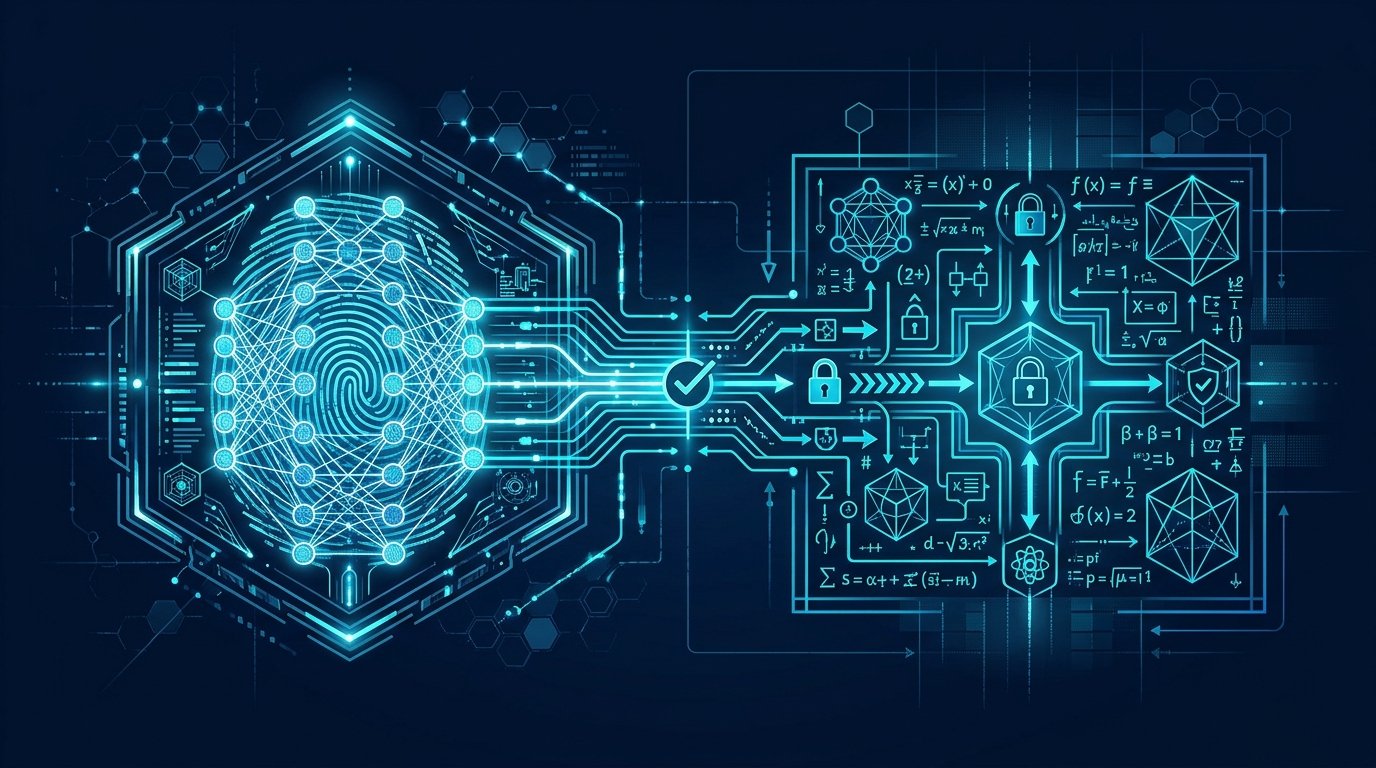
The fundamental technology used in Anthropic Flash Prove is based on cryptography, specifically zero-knowledge succinct non-interactive arguments of knowledge (zkSNARKs for short).
As you can see, in spite of the words being confusing, it isn’t too hard to get the idea.
Cryptographic proof techniques can be used to have one party prove to another that a computation was performed correctly without revealing too much of the private data involved in the computation.
In the case of AI systems, this translates to a provider being able to show that a particular answer was produced by a particular model, without exposing that model’s sensitive weights.
The process involves two important stages.
Step 1: Creating a Model Fingerprint
Prior to response generation, the AI provider generates a cryptographic commitment to the model’s weights.
Model weights are the internal numbers that guide an AI system’s decision-making process and how it produces answers.
These weights are often regarded as intellectual property. Researchers from enterprises such as Anthropic and OpenAI, for instance, have not typically released the full weights of their proprietary models.
Flash Prove generates a fingerprint to represent a particular set of model weights without revealing those weights.
This enables the provider to identify the model to be used for confirmation without exposing its underlying technology publicly.
Step 2: Generating a Cryptographic Proof
If a user provides a prompt and the provider gives an output, then a proof can be produced for that output.
The proof illustrates that the model that committed has generated the required output for the provided input.
The verifier can then verify the proof without needing to load the model weights or use the entire AI system.
If the proof is valid, then the verifier gains cryptographic evidence that the response corresponds to the model specified by the initial commitment.
The intention of this workflow is to lower the barrier for AI model validation for other users without high-performing hardware.
How FlashProve Protects Private AI Model Weights

What’s especially interesting about FlashProve is how it preserves your proprietary AI technology.
AI companies spend significant time and resources to train and develop the models. Weights from these models are part of this significant investment.
Publishing these weights might reveal essential IP and allow rivals to replicate their system more easily.
Traditional verification methods often force a trade-off between transparency and privacy.
Flash Prove tries to solve this issue by using zero-knowledge cryptography.
The proof of verification does not disclose the private weights of the model or the intermediate values in the computation process. Users can verify if the model produced the output claimed without getting access to the model parameters.
The architecture itself is not currently hidden by the system. According to research by Anthropic, architecture privacy could be a subject for more investigation.
This is interesting because, for example, protecting the model weights does not mean protecting all the other technical details in an AI system.
Anthropic Flash Prove Performance Results
Along with the announcement, Anthropic shared some technical information about how they carried out this experiment.
The researchers used Meta’s Llama 4 Maverick, a mixture-of-experts large language model with around 400 billion parameters, to evaluate the Flash Prove.
I used a 4-bit quantized version of the public weights of the model.
As reported by Anthropic, the system was able to reach proof generation speeds of about 110 tokens/second with one Nvidia H100 GPU.
Every proof was nearly 19 MB for a 1,024-token request.
The verification procedure was intended to execute on a standard CPU instead of that same GPU grid capable of creating the proof.
In testing, when it was confirmed, it took around 17 seconds on 24 CPU threads in Anthropic’s configuration.
These results are important because existing techniques for cryptographic verification of large language models have tended to be much slower.
But there’s a cost to this accuracy, too. According to notes shared by Anthropic, the time on GPU used to generate proofs in its benchmark was 70 to 95 times longer than that for regular inference.
As a result, Flash Prove cannot yet be considered a low-cost alternative to traditional AI processing.
Instead, the team showed that it is moving closer to making the cryptographic proof of an AI’s integrity feasible.
Potential Applications of AI Model Verification
If flash technology becomes more cost-effective and more widely adopted, it could enable several applications, for example:
Cybersecurity and Software Development
Developers of software might rely on validated AI results to show that they had analyzed the code of a security model.
For instance, a firm could try to make people believe that its library of software was pre-tested on a sophisticated cybersecurity AI before it was launched.
A cryptographically sound demonstration might have enabled independent evaluators to determine which model had run the data analysis.
This would not imply that the program is safe or that the conclusion of the AI is valid. It would merely imply that some information is known about the origin of the output of the model.
Business and Financial Decisions
Many companies are now using AI to search documents, compare options, and provide recommendations.
A company may want to show that a certain sophisticated model has studied its business plan, or has performed some other critical analysis.
Having these proved, verification of the model could indeed back up such statements and would contribute to making AI-supported business operations more transparent.
However, validating model identity is not the same as independently verifying the quality of a model’s recommendations.
Regulations for AI & Compliance
Governments and regulatory bodies are starting to focus more on the process and the means of development of more advanced AI systems.
Providers may be required to provide evidence that they are working to, or have adopted, approved models or managed by specific computing requirements.
Cryptic inference proofs might enable auditors to confirm what model produced a certain output.
This might enable monitoring of model development by regulators without exposing sensitive model weights.
Protecting AI Services From Unauthorized Changes
AI providers need to safeguard their own infrastructure.
It might be easier to spot when your system is compromised with a verification system.
This has potential value as AI services are adopted more widely across cloud services, third-party routing services, and enterprise apps.
Flash Prove Is Open Source, but It Is Not Ready for Commercial Deployment
Anthropic also issued research publications with its Flash Prove announcement.
The set of deliverables we make available consists of a technical report, a protocol description, code that implements the protocol, and a collection of formalisation scripts written in Lean.
The project is available under the Apache 2.0 open-source license.
By releasing these assets into the wild, other independent researchers, developers, and cryptography experts are now free to study the implementation, critique the limitations, and suggest modifications.
It is not the same to release an open-source research project and to create a commercial product.
Anthropic has characterized Flash Prove as a research steppingstone. The company has not revealed that it plans to use this particular system in its commercial products, or a time frame for commercial release.
Technical limitations of current implementation: relatively short verification contexts, computational cost, and limitations regarding the supported model architectures.
These problems need to be addressed further before the technology can be used on a regular basis for daily use.
Potential Challenges Facing Flash Prove’s Prospects
Despite its capabilities, Flash Prove has several practical and technical issues.
Secondly, the process of proof creation consumes significantly more computation than typical inference. This may mean higher operating costs for AI providers.
Secondly, the research is on a specific model architecture called a mixture of experts. Supporting other types of AI models might require more engineering effort.
Third, our implementation supports token contexts of up to 1,024 tokens. However, many AI conversations have significantly longer histories, which makes additional context support an important area for improvement.
Finally, cryptographic verification can assure us that a specific model produced a specific answer. But it can’t tell us if the answer is right or wrong, fair or unsafe, or factually accurate.
These nuances are important because AI trust encompasses more than just model identification. Users require accurate data about model performance, security, data handling, and restrictions.
The Implications of Flash Prove for the Future of Artificial Intelligence

The adoption of artificial intelligence is also raising concerns about transparency and accountability.
In previous times, users could usually take software companies at their word when it came to the operating systems that supported their products. But when AI is making life-or-death decisions, that might not be enough anymore.
Anthropic experiment name: Flash Prove. Anthropic has tested a different strategy with the Flash Prove experiment, in which AI is used in conjunction with cryptography.
Rather than simply trusting a provider’s reputation, users might at some point have a mathematical way of testing whether an AI’s answer was generated by the model it was supposed to be from.
This could open up new doors for AI creators, businesses, third-party auditors, and regulators.
It may further inspire other tech firms to develop similar technologies and open source the verification tools for AI.
Despite its promise, FlashProve is still an early-stage project, and so depends on improvements to performance, compatibility, and deployment to see how effective it might ultimately be.
Conclusion
Anthropic FlashProve is an exciting research area aimed at increasing trust in AI. By leveraging cryptographic proofs and zero-knowledge, the AI can prove a response without revealing sensitive weights of the model.
Use cases for the technology include cybersecurity, enterprise AI, software development, and regulation. While the technology is now available in an open-source format, it still has performance and technical shortcomings.
As AI becomes more deeply embedded into work and daily life, verifying which model created an answer could one day be an important piece of digital security.
AI’s future won’t be about bigger models. It will be about smarter models.
FAQs
1. What is Anthropic Flash Prove?
Anthropic Flash Prove is an experimental open-source proof system to determine which model generated a given response. It provides a cryptographic proof that confirms the model identity without revealing the private model weights.
2. How does Flash Prove authenticate the identity of an AI model?
Flash Prove leverages cryptography and model fingerprints to generate mathematical proof on AI outputs that can be independently verified to have been generated by a particular model.
3. Is Anthropic Flash Prove exposing the private weights of an AI model?
Not at the moment. The premise of Flash Prove is to prove outputs of commercial AI models without revealing the numerical weights that determine how they work.
4. Why is AI model verification important?
AI model verification can also help detect inappropriate replacement of the model, thereby increasing transparency and confidence in AI services. It could also help the business verify that the AI model it has paid for is being deployed.
5. Is Anthropic Flash Prove available for public use?
An open-source implementation and research materials, named Flash Prove, have been released by Anthropic. Flash Prove is an experimental implementation and has not been declared a go-to-market product by Anthropic.
6. Can Flash Prove guarantee that an AI-generated answer is accurate?
No. Flash Prove only provides information about the AI model that produced the output. The answer itself may contain misinformation, internal bias, or be otherwise incorrect.
7. What is provable inference in artificial intelligence?
Provable inference uses cryptographic proofs to show an AI model has performed a specific computation. The goal of this method is to enable AI outputs to be independently verified while preserving confidential details of the AI model.





Pingback: FentoMagazine.com Sitemaps A Complete Guide For Website
Pingback: Meta Muse AI Avatar Video Calls Now Available to US Users 2026
Pingback: Anthropic Valuation: IPO Estimates, Investor Concerns & What’s Next 2026