

Introduction: Best apps for tracking your reading
Books aren’t just something to pass the time. They can be an opportunity to learn new skills, connect with others, and even introduce you to new concepts that you will remember for years to come. However, the more books you read, the more similar they all seem to become.
That’s where book tracking apps come in. Follow along with a list of your books, get recommendations, track your reading progress, set new goals, or explore books to read.
Many of them have social sharing features, tailor-made suggestions, and AI solutions that simplify maintaining a reading habit.
At Tach Crunch.com, we cover helpful tech, software, and digital tools that can make your daily life easier. Here, we take a look at five book-tracking apps to try out, including Fable, Bookshelf, Pagebound, Story Graph, and Margins – each of which has a different way to track your books, set reading goals, and figure out what to read.
Whether you’re a casual reader or a serious bookworm, this comparison will give you a great idea of what each app has to offer and what kind of reading experiences you can expect from each of them.
Why Use an App to Track Your Reading?
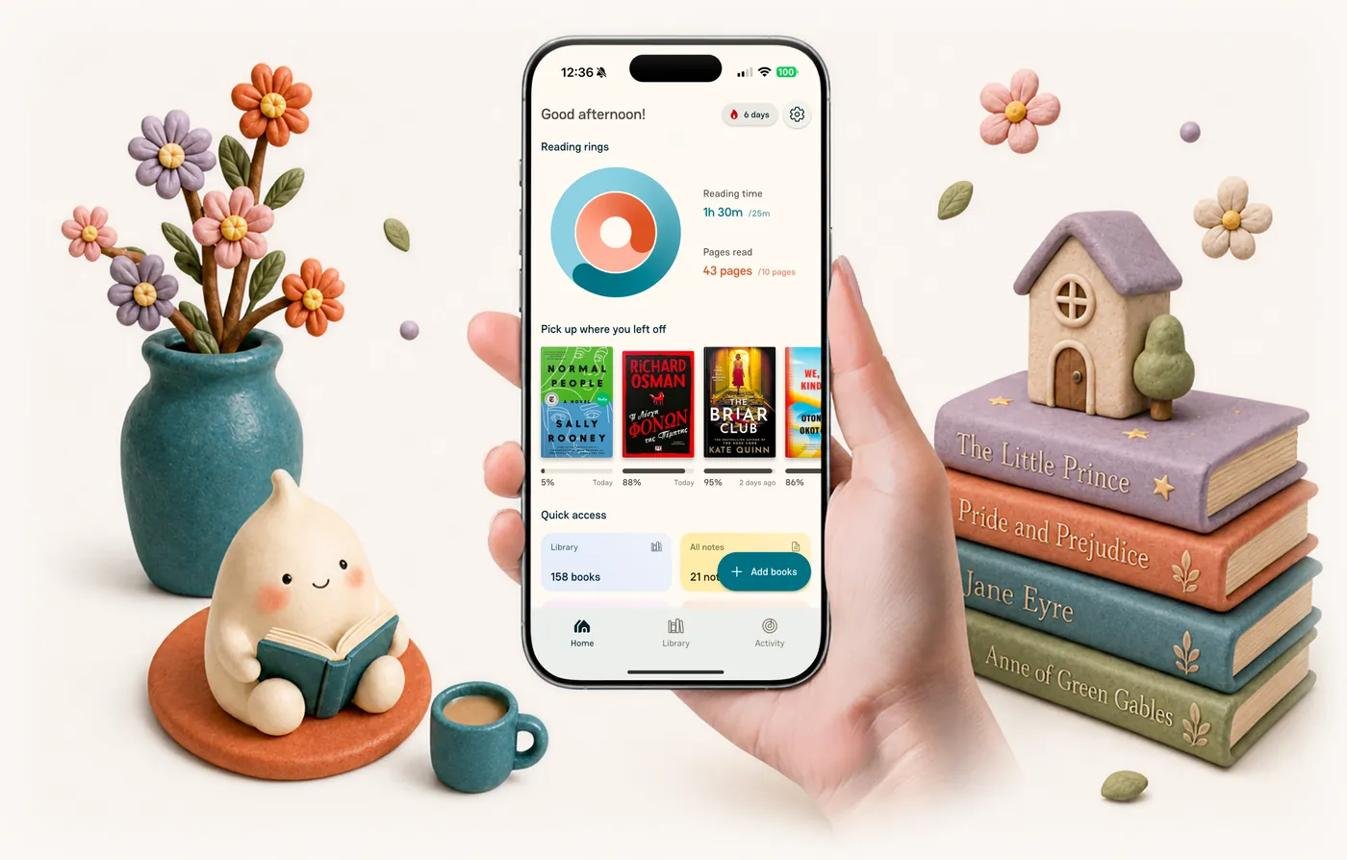
A reading application will help you organize your book collection more efficiently than using a scratchpad or journals. You won’t need to jot down your shopping list on the fridge or wonder what books to buy or read next.
Popular features on reading apps include:
- Reading progress: Record the books you are still reading, as well as those that you have already finished.
- Private reading lists: Maintain lists of desired content for subsequent reading.
- Reading goals: Decide on how many books or pages you plan to read.
- Book suggestions: Get recommendations on books that match your interests and preferences.
- Reading stats: See your numbers and get to know how you read.
- Social discussions: Post reviews, recommend books to others, and chat about books with fellow readers.
They can be especially useful for people who want to keep up a regular reading habit or who have a large collection of books they intend to revisit.
But that level of complexity isn’t necessary for everyone. If your top priority is simply recalling book titles, then a simple tracker might be better than a social network with complex stats.
1. Fable: An App for Readers and Bookish Communities

Fable is the best of both worlds by merging book tracking and the social side of reading. Fable is built for people who love to talk about the books they’re reading and meet like-minded readers.
Users can create lists of books, set goals, track streaks, write reviews, and join virtual book clubs. Recommendations can be tailored to individual users to help them find books of interest.
Why use Fable?
Fable emphasizes community at the heart of the reading experience. Instead of just keeping a log of books finished, users will also be able to chat with other readers and share their thoughts.
Key features are:
- Reading lists and tracking progress
- Personal reading goals and streaks
- Book recommendations and reviews
2. Bookshelf: A Practical Way to Organize Your Library
Bookshelf keeps personal libraries in order and ensures that readers retain the valuable information contained in books. It provides digital bookshelves and reading management tools to help manage a burgeoning collection.
Users can assemble custom collections, set reading goals, get notifications, and save quotes. AI summaries and insights can be provided according to the plan and features available.
What makes Bookshelf useful?
The app might be useful to readers who are interested in anything else for a bookshelf – they can assign books to custom shelves based on topics they care about and revisit selected passages through notes and saved quotes.
Its features include:
- Customizable book collections
- Reading goals and reminders
- Saved quotes & Reading Notes
- Book summaries and AI-assisted insights
- Tools for organizing previously read titles
This is a new kind of book-related software. It could assist someone in going back over essential points, rather than re-reading the whole book.
An automated summary may lack context or oversimplify a subtle argument. When accuracy and understanding the entire argument are important, you should always consult the original book.
Before saving notes about personal information or allowing users to buy premium features, users should be able to read a subscription agreement and privacy policy.
Best for: Readers who need a tidy digital bookshelf plus easy reloads of key ideas.
3. Pagebound: Discover Books Through Reader Discussions
Pagebound is a combination of tracking books and conversation around a single book. It provides a forum to express opinions and ideas about books without the structure of a formal book club.
Organize your reading list, keep track of the books you’re reading, set reading goals, and engage in discussions with others who are reading the same book.
What makes Pagebound different?
Organizing conversations around reading progress, which was a heartening aspect of the project, might allow commenters to share theories and reactions without encountering spoilers right away.
-For example, we can discuss characters that seem suspicious or speculate as to how the story might end while still reading the story of a mystery novel.
Some of its important features are:
- Book lists and reading progress tracking
- Personal reading goals
- Discussions focused on individual books
- Shared reactions and theories
The chance to engage with other readers of shared passions
This works especially well if you like to discuss books but aren’t able to attend regularly scheduled meetings.
However, readers must be aware of those ‘discussion’ tags and spoiler alerts. Progress-based conversations can get rid of spoilers, but they can’t prevent all spoilers.
Best for: Readers who enjoy dynamic book chats and talking about books as they are reading.
5. Margins: Discover Your Next Book Based on Your Mood
Margins explores your book tastes differently. Rather than exploring book genres or extensively popular books, it prompts you to find books that match your mood, style, or atmosphere.
For example, perhaps a patron is seeking a book that has a nostalgic feel, or that has an aura of mystery or serenity, or that evokes a particular time or place. Mood-based discovery is a way to find books when a traditional query doesn’t quite meet the mark.
How is Margins unique?
Those include reading goals and digital bookshelves you can customize.
It offers:
- Mood-based book discovery
- Reading goal tracking
- Customizable digital shelves
- Visual library organization
A feature to promote dedicated reading time
The Reading Time feature has a meditation-style timer that will launch social media apps and prevent notifications to reduce distractions where available.
Some of these apps could come in handy if you want to spend more time reading and less time flipping between apps. However, device compatibility and feature availability should be considered before you start to depend on these tools.
Best for: Readers who prefer mood-based suggestions and a fully customizable digital bookshelf.
Comparing the Best Book Tracking Apps
Each app serves a slightly different purpose. The following comparison can help you decide which platform is worth exploring first.
| App | Main strength | Ideal reader |
| Fable | Social reading and book clubs | Readers who enjoy community |
| Bookshelf | Library organization and reading tools | Readers who save quotes and notes |
| Pagebound | Book-specific discussions | Readers who enjoy sharing reactions |
| StoryGraph | Reading statistics and recommendations | Readers who like analyzing their habits |
| Margins | Mood-based book discovery | Readers looking for books by atmosphere |
These are our impressions of how each company’s different services compare. These aren’t real-world tests based on personal hands-on experience with each – just our opinions. Features, pricing, and availability are subject to change. See each service’s official website or app store listing for more info.
How to Choose the Best Reading App for Your Needs

The best reading app isn’t all about features. The best reading app is the one that follows your reading habits and enhances the experience.
Consider your main priority.
Discover what it is you wish to work on.
For book discussion with other people, look at Fable or Pagebound. For curation of a collection and note saving, look into Bookshelf. If you’re interested in many detailed statistics, you may want to look at Story Graph, but perhaps Margins for mood-based discovery.
Check free and paid features.s
Some apps offer free admission but charge for a premium upgrade. Some advanced analytics, more customization, or other collections are included with the free version.
Determine which features you will actually use and take a subscription. Review the real cost, billing period, cancellation policy, and whether the basic level free tier is enough.
Review privacy settings
Your reading history demonstrates something about you. Can you set your profile and apps’ reading and grouping options to different privacy levels?
It is relevant to also take a look at how the service treats personal details, bookmarked notes, account deletion, and data export.
The Impact of Technology on Reading Experience
These apps prove that technology supports a hobby without overwhelming it.
Digital shelves allow for readers to visually scan massive bookstores Recommendation features can save readers from choosing books from a typical genre, and statistics about the books they read will be able to show you about their reading habits Forums enable readers to converse with people who they might not meet outside the books.
It will show you that there are tools under the “curtain” of the AI. For example: saving summaries, an average of common themes, or previous ideas can be revisited.
However, they should be viewed as a mere guide to reading the document and a substitute for that same document. It should not do injustice to the original document, and the predictions, unsurprisingly, do not always satisfy your insatiable curiosity.
There is a fine line between inspiring and recording and “slapping it in your face”. We think the streaks and goals for the year help encourage you to do it, but we don’t want to make reading a chore.
The best, most useful piece of technology of all is whatever gets us more books, more time to read them, and less time to tend to them.
FAQs
1. What is the best app for tracking reading?
The best app for you depends on what you’re after. Fable excels at social reading. Bookshelf is good for library organization. Pagebound is good for conversations. Story Graph is good for reading stats. Margins is good for mood-based discovery.
2. Are book trackers free?
Most reading platforms have free options for reading. Premium features, however, usually require a subscription. See the official app pages for the latest pricing and free plan restrictions.
cancalusion
Check out these best reading apps to keep up with the books you’re reading and to find new books.
Fable for social reading, Bookshelf for personal library, Pagebound for talk,k Story Graph for stats and tips, Margins for mood-based discovery.
Prioritise, compare free and paid, and the privacy options. You don’t need all the features in order to create a fulfilling reading journey.
Begin with the app that fits your needs and use it to plan your upcoming reading list, find new authors, and manage your library.
If you want more tutorials on apps, software, and new tech, visit our Technology page on TachCrunch.com.