Introduction: Simplismart AI inference
As more US companies invest in artificial intelligence (AI), the cost of deploying AI applications has become a major issue. Running AI models requires high-performance computers, and expensive graphics processing units (GPUs) can make enterprise-wide deployment difficult. Simplismart, an Indian startup, is aiming to make AI inference more cost-effective with software.
Nvidia has invested in a $14 million Series B for Simplismart to help the business accelerate its mission to enable other companies to operate AI models more efficiently, and to improve performance on today’s existing computing systems. The investment underscores the opportunity in the US AI market as companies seek new tools to offset the surging costs of computing.
For the TechCrunch.com readership, this agreement provides a more detailed view into how enterprise AI software startups can support organizations in balancing their performance, reliability, and infrastructure spend.
Nvidia Invests $14 Million in Simplismart.
Simplismart completed a $14 million all-primary series B funding round led by Dallas Venture Capital. The company was also backed by Nvidia, Accel, Shastra VC, and Micromax.
Simplismart’s Bengaluru startup valued at $100 mn including new investment Simplismart, the Bengaluru-based startup, was valued at around $100 m, including the new investment. The startup was set up in 2022 to develop a software platform that enables enterprises to deploy, manage, and optimise AI models across on-cloud infrastructure and on-premises computing.
This investment comes at a time when companies across the United States and the world are further developing their AI capabilities. Companies are testing AI-powered customer service, content creation, business automation, and enterprise productivity applications. But running these at scale can require a lot of computing power.
Simplismart intends to address this by assisting companies in streamlining the usage of hardware for their models.
The additional capital raised will be used to continue growing in the US, recruit additional talent to expand the team, and fund ongoing research & development of the company’s AI inference platform.
Why Are US Companies Searching for More Efficient AI Infrastructure
By arming American companies with the means to grow, AI presents an incredible opportunity, but the infrastructure necessary to support AI applications requires a significant investment. Many companies rely on GPUs to crunch the data.
Buying or renting more GPUs can be cost-prohibitive. Besides, companies have to factor in cloud infrastructure bills, application response times, user demands, and the dependability of their AI services.
For companies with thousands or millions of users, having a little more computing power per machine can translate into savings on the bottom line.
This is where AI inference optimisation comes into play.
AI inference is the use of a trained AI model to produce responses, answers, images, videos, or other AI outputs. Inference technology is all around you when you’re speaking to a customer-facing AI chatbot or using an AI-powered application.
The computational resources required depend on the model, the task, and the number of requests.
Simplismart creates software to enable businesses to fulfill these needs without expensive hardware. It may be of particular use to US startups and companies looking to grow AI products without further hardware investments.
How Simplismart Helps Businesses Optimize GPU Usage
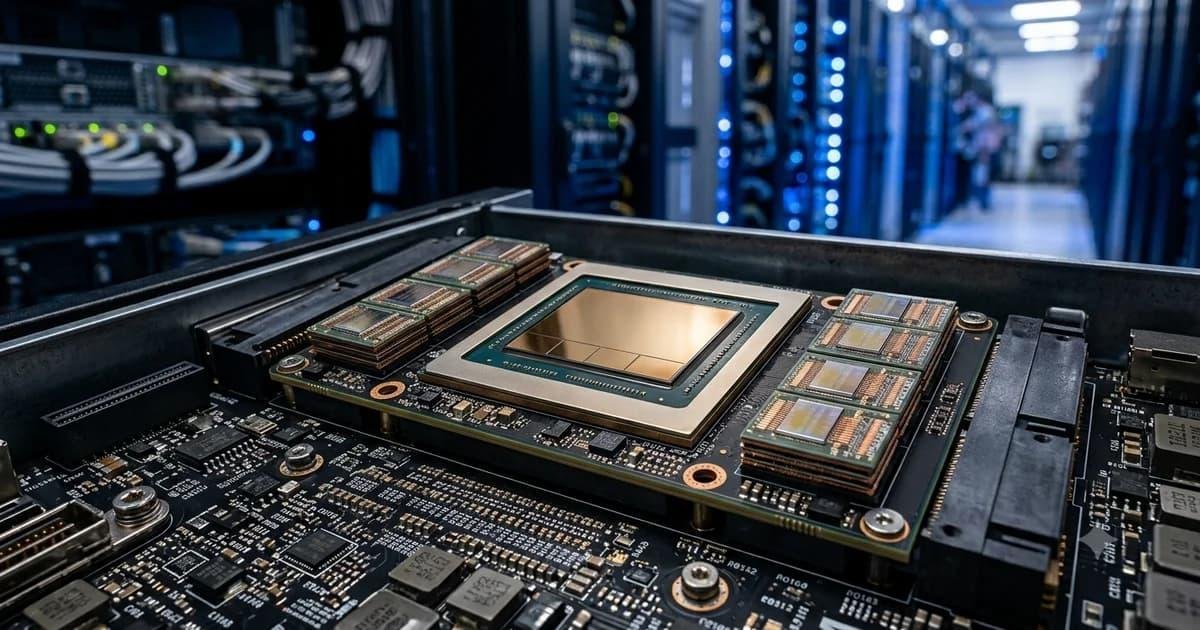
The software from Simplismart is designed to bridge AI models and the infrastructure on which they are run. It enables companies to set up and manage deployments based on their desired levels of performance and cost.
Rather than making companies choose between the fastest processing and the lowest cost. The platform strives to find a compromise optimized for the application.
Its software supports several important functions:
- AI models onthe Simplismart platform, within their cloud, and on-premises setup.
- It helps to deal with response time, request capacity, and consumption of computing resources.
- Automatic scaling: Computing resources will scale with the demand for an AI application.
- Model fine-tuning: Available tools allow organizations to tune models for their needs.
- Performance monitoring: Companies will be able to monitor their AI workloads and find efficiencies.
These features could enable organizations to get more out of their current GPU environments. Instead of automatically expanding their computing footprint in response to demand, organizations could run more efficiently.
Not only small businesses stand to benefit. The same can be said of the big guys, and the cloud providers that serve them.
Simplismart Reports Big Savings for InVideo
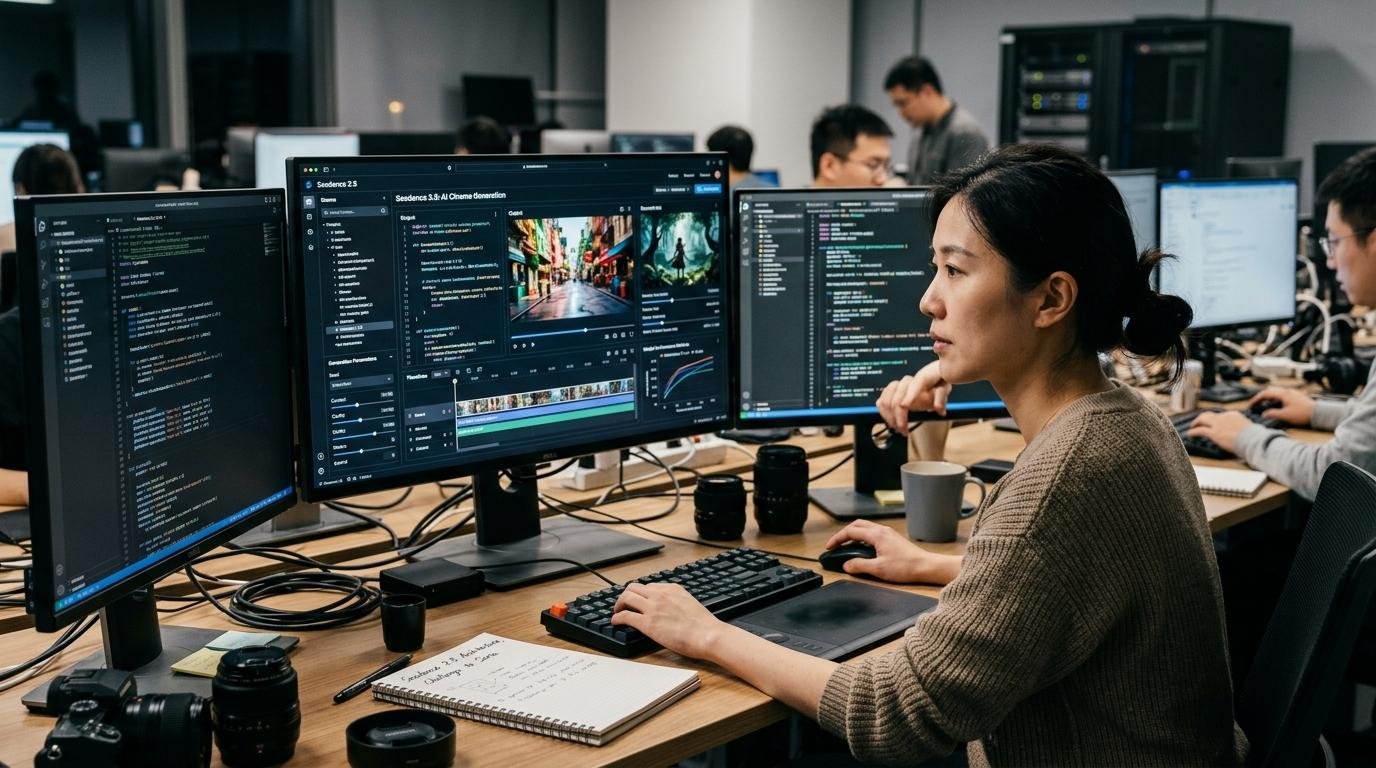
One example of the company’s technology is InVideo, an AI video-generation platform.
Simplismart’s software reduced InVideo’s GPU serving cost by 56 percent, according to the company. (This is not an independently verified industry figure, but a result claimed by the company).
Simplismart partners with enterprise AI startup Ema, along with HeyGen and Higgsfield, AI video companies.
Yotta’s infrastructure services will also be used by cloud provider Yotta in India to run the serverless AI inference service in its platform called Shakti Studio.
Here are some more examples of what companies have been interested in, including video production businesses, enterprise AI application builders, and cloud providers.
In the US, companies running AI video platforms, chatbots, and high-traffic applications may find that speed of processing is crucial, as each new query adds increased pressure on infrastructure.
The United States Is a Major Market for Simplismart
While the company has more users in India, over half of the revenue for Simplismart is generated from the US, co-founder and CEO Amritanshu Jain said in an email to TechCrunch.
That’s because those kinds of revenue streams are the reason the startup plans to scale up American operations after the funding round.
Jain also said the company’s recurring revenue run rate had grown 14 times over the last six months, to a figure in the eight figures. The company clarified that this number was on the basis of recent customer usage, not contracted recurring revenue, and did not include revenue passed through to infrastructure providers.
The exact revenue figure was not disclosed.
ILLUSTRATION BY LILIAN LIN To drive demand, Simplismart might expand its US customer base and work with companies that are pouring resources into building AI infrastructure. There are AI startups, large technology companies, major businesses putting generative AI into use, and providers of cloud services to other organizations.
Growth in the United States might help the business forge more ventures and cement its stature in the aggressive AI software industry.
Nvidia Investment Sparks Interesting Trend in AI industry.
Nvidia is best known for the GPUs it provides to train and run AIs. Its ownership stake in a company that is working on reducing the number of GPUs needed to do some work might seem counter-intuitive at first.
But making computers more efficient does not necessarily mean a downtrend forthe AI hardware industry-wide.
The lower cost of delivering AI applications might also make it easier for businesses to build new products, reach more users, and scale their AI services. Increased uptake could generate further demand for the needed computing infrastructure.
The CEO of Simplismart points out that businesses do not always require the fastest inference or the cheapest inference, but they need performance and operating costs that suit their applications.
The potentially more pragmatic nature of this plan could help make AI deployment more economical for companies that would struggle to justify underpowered infrastructure.
As part of the investment, Simplismart will benefit from technical cooperation with Nvidia. Jain told TechCrunch that the two companies have been collaborating on some integrations using Nvidia’s Dynamo inference platform. Nvidia has also helped Simplismart reach prospective customers and partners.
This is a demonstration of how hardware providers and software companies can collaborate to enhance AI infrastructure.
Who Founded Simplismart?
Simplismart was founded in 2022 by Amritanshu Jain, a former Oracle engineer who serves as the company’s CEO, and Devansh Ghatak, a former Google engineer. The two founders met while studying at BITS Pilani, an Indian engineering and technology institution.
Their experience building and deploying machine-learning systems helped shape the company’s focus on AI infrastructure and model optimization. According to Jain, Simplismart has grown to a team of 58 employees.
As the company expands its presence in the United States, its engineering expertise and ability to support customers across different AI workloads will be important to its growth.
Competition in the AI Inference Market Is Growing
Simplismart has raised financing. It’s entering a market dominated by large players in cloud providers, integrated AI infrastructure companies, and new startups.
AWS, Google Cloud, and Microsoft Azure provide offerings that enable the deployment and operation of AI models, while Nvidia offers software and tools that enhance AI inference.
Simplismart is building its software platform around tailored optimization, especially for workforces that have high service-level agreements and total cost-of-ownership mandates.
Service level agreements include other specifications like response time, performance, availability, etc. Total cost of ownership means the total cost of keeping a system running, including all costs, not only the price.
For companies rolling out AI to their customers, both are relevant. Cost reductions may be helpful – but not if the AI runs slowly or crashes.
Simplismart must prove that its software is able to deliver the right combination of cost, speed, and resilience for a broad range of use cases.
Why Performance and Operating Costs Matter
“We believe this method is ideal for clients with target SLAs and TCO”.
SLAs specify what level of performance and dependability a service is supposed to deliver; TCO is the total cost of owning a system. For those using systems to run AI applications, both are important, as cutting down on compute costs doesn’t do much good if response times or availability are compromised.
CEO Amritanshu Jain explained to TechCrunch. “This approach can also help us target companies that want predictable AI performance, with more control over infrastructure cost.”
What Simplismart’s Funding Means for the US AI Space
It’s also a sign of the evolution of the AI industry. With companies transitioning from pilots and experiments to the deployment of AI applications into their daily business, cost is coming into focus.
“Organizations no longer simply want to train high-performance models. They need to run those models efficiently, scale their offerings based on customer demand, and account for the cost of infrastructure services. “
As AI applications become more accessible to a wider audience, software that increases GPU utilization and lowers inference costs could become even more valuable.
Simplismart expects to use the new funds to grow in the US and build out its platform. Growth going forward will depend on Simplismart’s ability to secure customers and generate concrete benefits, while competing against established cloud and AI platform providers.
For American businesses, the bigger promise is simple: that more efficient AI infrastructure will reduce the barrier to the deployment of helpful AI applications without letting compute costs spiral out of control.
However, as the market matures, startups focused on inference optimization might become a significant part of the AI ecosystem that will enable the next phase of AI adoption.
Earlier Reports Suggested a Larger Funding Round
Before the $14 million Series B announcement, India’s Economic Times reported that Simplismart was in discussions to raise between $40 million and $50 million at a potential valuation of $300 million to $400 million.
However, those figures were reported as part of earlier fundraising discussions and were not the terms of the announced Series B round. When asked about the report, Jain declined to comment, saying the company was not actively fundraising. He also said the Series B round had closed and would not be extended.
The difference between the earlier reported figures and the announced deal highlights why proposed fundraising terms should be distinguished from completed investments.
Conclusion
Nvidia’s backstop deal for Simplismart underscored how crucial it is to make AI applications more affordable and efficient. US firms are increasing their adoption of generative AI, video-generation software, and enterprise automation, and making GPU resources more efficient could help offset infrastructure costs without increasing costs.
The Series B investment of $14 million from Simplismart will be used to expand in the US, to grow the company’s team and also to advance its AI inference platform. But the firm will be competing with bigger cloud players and AI infrastructure companies.
FAQs
1. How much funding did Simplismart raise?
Simplismart secured a Series B funding of USD 14 million, led by Dallas Venture Capital, with other investors including Nvidia, Accel, Shastra VC, and Micromax.
2. How does Simplismart help reduce GPU costs?
Its software enables deployment and inference of AI models and manages performance, computing, and scaling. Simplismart said its platform reduced GPU serving costs for Invideo by 56%.
3. Why is Nvidia investing in Simplismart?
The funding supports software that could help companies run AI workloads more efficiently. Greater inference efficiency may increase AI computing and potentially lower AI application costs.
4. Why is the US market important to Simplismart?
The company has more customers in India, but more than half of Simplismart’s revenue comes from the US, co-founder and CEO Amritanshu Jain says. The startup plans to expand its presence in the US with the fresh capital.